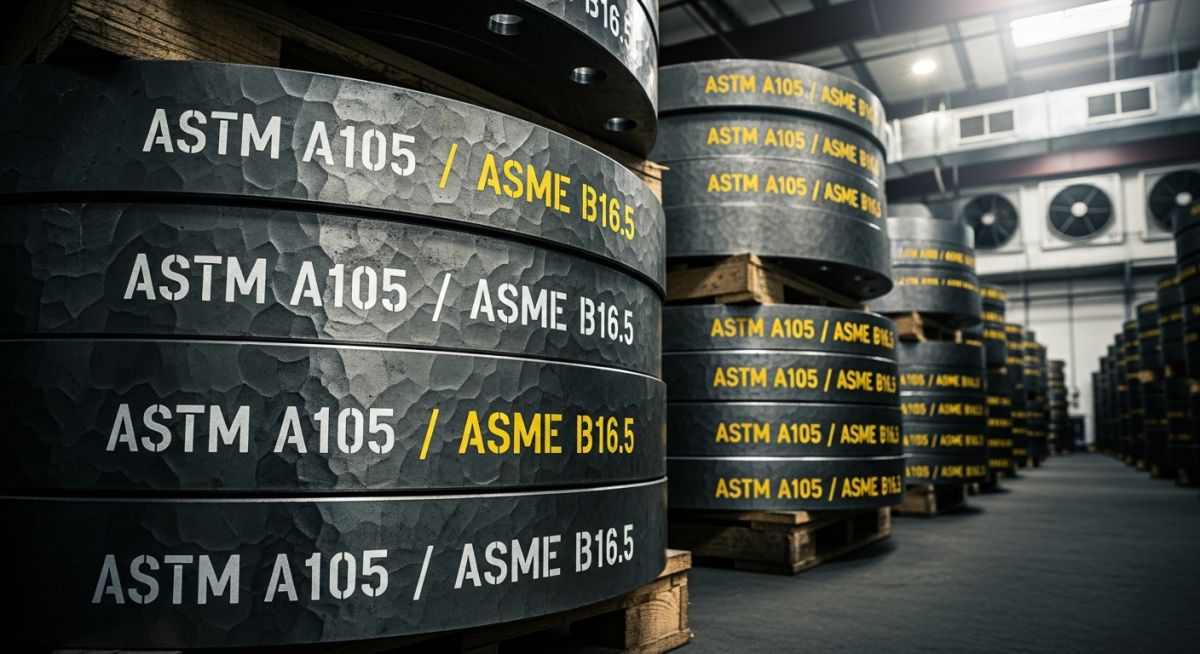
Metallurgical Authority Current Year: 2026 Edition What is ASTM A105 Material? Properties, Applications, and A105 vs. A105N It is 3:00 AM on a freezing winter morning at a midstream gas plant. As the pressure builds during a system restart, a loud "crack" echoes through the valve station. Upon inspection, a forged flange has suffered a brittle fracture. The material tag reads "ASTM A105." Why did a standard carbon steel component fail so spectacularly? The answer lies in the subtle but critical difference between as-forged ASTM A105 Material and its heat-treated counterpart, A105N. In the world of high-pressure piping and EPC projects, understanding the grain structure and temperature limits of your steel isn't just a technicality—it is the difference between a safe plant and a catastrophic failure. This guide explores everything you need to know about A105 in 2026. Key Takeaways Forging Superiority: Why A105 is the "Go-To" for forged carbon steel components like flanges, valves, and fittings. The "N" Factor: Identifying when "Normalizing" is a mandatory safety requirement for impact toughness. Pressure Ratings: How ASTM A105 Material performs under ASME B16.5 and B16.34 standards. Quick Answer ASTM A105 Material is the standard specification for forged carbon steel piping components used in ambient and higher-temperature service in pressure systems. It is primarily used to manufacture flanges, valves, and fittings. While A105 is the base material, ASTM A105N indicates the material has undergone "Normalizing" heat treatment, which refines the grain structure and significantly improves ductility and impact strength. "I often see procurement teams try to save costs by ordering plain A105 for Class 300 or higher applications. In my 20 years in EPC, I’ve made it a rule: Always specify A105N (Normalized) for high-pressure or critical service. The added impact toughness is the best insurance policy you can buy for your piping system." — Atul Singla, Founder of Epcland In This Guide 1. Technical Definition: What is ASTM A105? 2. Chemical & Mechanical Properties 3. The Critical Difference: A105 vs. A105N 4. Why Normalizing is Mandatory 5. Common Engineering Applications 6. Failure Case Study: Brittle Fracture 7. A105 vs. A350 LF2 Comparison ASTM A105 Metallurgy Knowledge Check Test your understanding of carbon steel forgings and heat treatment standards. 1. What is the primary manufacturing method for ASTM A105 Material? A) Forging B) Casting C) Extrusion 2. What does the "N" suffix in ASTM A105N signify? A) Nitrided surface treatment B) Normalized heat treatment C) High Nickel content 3. According to the standard, when is heat treatment (Normalizing) mandatory for A105 flanges? A) For all Class 150 flanges B) For flanges above Class 300 C) Only for stainless steel grades 4. Which mechanical property is most significantly improved by Normalizing A105 steel? A) Low-temperature impact toughness B) Surface hardness only C) Magnetic permeability 5. What is the maximum Carbon (C) content allowed in ASTM A105 Material? A) 0.15% B) 0.35% C) 0.80% Next Question Technical Definition: What is ASTM A105 Material? ASTM A105 Material is the most widely utilized carbon steel forging specification for piping components in the global energy, chemical, and manufacturing sectors as of 2026. This specification covers forged carbon steel piping components for ambient and higher-temperature service in pressure systems. It is the material of choice for manufacturing flanges, valves, fittings, and similar parts that require the superior structural integrity provided by the forging process. Unlike cast steel (such as ASTM A216), which can contain internal porosities or shrinkage defects, forged A105 steel undergoes intense mechanical working that refines its grain structure, resulting in higher strength and better resistance to fatigue. Within the framework of Engineering, Procurement, and Construction (EPC), ASTM A105 Material is intrinsically linked to the ASME B16.5 (Pipe Flanges) and ASME B16.34 (Valves) standards. It serves as the design baseline for carbon steel components. However, it is essential to note that the A105 specification has specific limits: it is restricted to components weighing no more than 10,000 lbs (4540 kg). For larger forgings, engineers must transition to other standards like ASTM A266. Furthermore, while it is excellent for ambient and high-temperature service, its use in sub-zero environments is limited unless specific heat treatments are applied. Chemical Composition and Mechanical Properties of ASTM A105 Material The reliability of ASTM A105 Material stems from its precise metallurgical balance. It is classified as a medium-carbon steel, designed to provide a perfect equilibrium between weldability, machinability, and mechanical strength. The "Carbon Equivalent" (CE) is a critical factor for engineers, as it dictates how the material will react during welding and whether pre-heating or post-weld heat treatment (PWHT) is required to prevent cracking. Element Composition (Max %) Carbon (C)0.35 Manganese (Mn)0.60 - 1.05 Phosphorus (P)0.035 Sulfur (S)0.040 Silicon (Si)0.10 - 0.35 Copper (Cu)0.40 From a mechanical standpoint, ASTM A105 Material is designed to meet rigorous stress requirements. The minimum Tensile Strength is 70,000 psi (485 MPa), and the minimum Yield Strength is 36,000 psi (250 MPa). These values ensure that the flanges and valves can withstand the internal pressures defined by ASME pressure-temperature ratings. Additionally, the material must maintain a maximum hardness of 187 HBW (Brinell) to ensure it is not too brittle for machining or service. The Critical Difference: ASTM A105 vs. ASTM A105N Explained The most common technical query regarding this specification is the difference between standard A105 and ASTM A105N. To the naked eye, a flange made of either material looks identical, but at a microscopic level, they are worlds apart. The "N" stands for Normalized. Normalizing is a specific heat treatment process where the steel is heated to a temperature above its transformation range (typically around 900 degrees Celsius) and then cooled in still air. As-forged ASTM A105 Material often contains large, non-uniform grains and internal stresses caused by the forging hammers. This can lead to "low-temperature brittleness," where the steel loses its ability to absorb impact and can shatter like glass if struck or pressurized in cold conditions. ASTM A105N, through the normalizing process, achieves grain refinement—creating a uniform, fine-grained structure that significantly enhances ductility and impact toughness. In modern 2026 engineering specifications, A105N is often mandatory for any component operating below 0 degrees Celsius or for high-pressure classes (Class 300 and above). Why Heat Treatment (Normalizing) is Mandatory for ASTM A105N While the base ASTM A105 Material specification does not always require heat treatment for low-pressure, low-risk components (such as Class 150 flanges under a certain size), the "N" designation makes it a contractual and safety obligation. The normalizing process is critical because it eliminates the "internal memory" of the forging process. When a steel ingot is hammered into a flange shape, the grains are stretched and distorted. If left as-is, these localized stresses can lead to stress corrosion cracking or unpredictable deformation when the component is welded into a piping spool. In 2026, many project specifications now mandate ASTM A105N for all pressure-containing parts regardless of the pressure class. This is because normalizing ensures that the material meets the minimum requirements for elongation and reduction of area, providing a "safety cushion" during unforeseen pressure surges or thermal shocks. Without normalizing, ASTM A105 Material remains "notched sensitive," meaning a small surface scratch could propagate into a major crack under stress. Common Engineering Applications of ASTM A105 Material in EPC In the context of EPC (Engineering, Procurement, and Construction) projects, ASTM A105 Material is the workhorse of the carbon steel piping class. Its versatility allows it to be used across diverse subsystems. Some of the most frequent applications include: ASME B16.5 Flanges: Weld Neck, Slip-on, and Blind flanges used to connect pipe sections and equipment. Forged Fittings: Elbows, Tees, and Couplings per ASME B16.11, typically for small-bore piping (2" and below). Valve Bodies: Gate, Globe, and Check valve bodies designed for high-pressure steam or hydrocarbon service. Branch Connections: Weldolets, Thredolets, and Sockolets (MSS SP-97) for reinforcing pipe headers. ASTM A105 Material vs. ASTM A350 LF2: Choosing the Right Carbon Steel A common dilemma for piping engineers is deciding between ASTM A105 Material and ASTM A350 LF2. While both are forged carbon steels, their temperature envelopes differ significantly. A105 is designed for ambient and high-temperature service (down to -29 degrees Celsius or -20 degrees Fahrenheit). However, in many global regions where winter temperatures drop below this threshold, A105 becomes susceptible to brittle failure. ASTM A350 LF2 is the "Low-Temperature Carbon Steel" (LTCS) equivalent. It undergoes mandatory Charpy V-Notch impact testing at -46 degrees Celsius (-50 degrees Fahrenheit) to ensure it remains ductile in extreme cold. If your project is located in an Arctic or sub-Arctic environment, or involves cryogenic-adjacent processes, transitioning from A105/A105N to A350 LF2 is a mandatory engineering requirement. Property ASTM A105 (Standard) ASTM A350 LF2 (LTCS) Lower Temp Limit -29°C (-20°F) -46°C (-50°F) Impact Testing Not Mandatory Mandatory (Charpy V-Notch) Heat Treatment Optional for Class 150/300 Mandatory (Normalized/Quenched) Grain Structure Coarse (As-Forged) Fine/Refined Compliance Note ASTM A105 Material components must comply with ASME Section II Part A for material procurement and ASME B31.3 for process piping design limits. Always verify the Material Test Report (MTR) to ensure the Heat Number matches the stamp on the physical component. ASTM A105 Carbon Equivalent (CE) Calculator Determine the weldability of your ASTM A105 material and identify if pre-heating is required based on the IIW formula. Carbon (C) % Manganese (Mn) % Cr % Mo % V % Nickel (Ni) % Copper (Cu) % Analyze Weldability Calculated Carbon Equivalent (CE) 0.47 Caution Required CE is between 0.40 and 0.45. Preheating is recommended per ASME B31.3 to avoid hydrogen-induced cracking. Formula: CE = C + Mn/6 + (Cr+Mo+V)/5 + (Ni+Cu)/15 Don't miss this video related to ASTM A105 Material Summary: Master Piping Engineering with our complete 125+ hour Certification Course: ...... ✅ 2500+ VIDEOS View Playlists → JOIN EXCLUSIVE EDUCATION SUBSCRIBE ASTM A105 Material Failure Case Study: The Winter Brittle Fracture The Incident: Sudden Depressurization In February 2026, a natural gas processing facility located in a high-latitude region experienced a catastrophic failure of a 12-inch Class 600 flange. During a routine system startup in an ambient temperature of -15°C (5°F), the flange underwent a "cleavage-type" brittle fracture, leading to an immediate release of high-pressure methane. Fortunately, the leak was detected by infrared sensors before an ignition source was found, but the plant was forced into an emergency shutdown. The Metallurgical Analysis The forensic investigation focused on the Material Test Report (MTR) and a microscopic examination of the fracture face. The findings revealed: Material Specification: The component was ordered as standard ASTM A105 Material. Crucially, it was supplied in the "as-forged" condition without any normalizing heat treatment. Microstructure: Large, coarse grains were present at the fracture initiation point. This coarse structure is a direct result of the high-heat forging process without a refining heat treatment. Impact Energy: Charpy V-Notch testing on samples from the failed flange showed impact energy values of less than 10 Joules at -15°C, well below the safe operating threshold for pressure-containing parts. The Engineering Fix The root cause was identified as the use of non-normalized ASTM A105 Material in a climate where the ambient temperature dropped below the material's Ductile-to-Brittle Transition Temperature (DBTT). The engineering team issued an immediate change order to replace all Class 300 and higher external flanges with ASTM A105N (Normalized). For critical bypass lines exposed to wind-chill, the material was upgraded to ASTM A350 LF2 Class 1, which guarantees impact toughness down to -46°C. Lessons Learned This failure proves that relying on standard ASTM A105 Material for cold-climate EPC projects is an unacceptable risk. In 2026, any facility operating in regions with significant winter seasonal changes must mandate ASTM A105N at a minimum. Normalizing refines the grain structure, effectively lowering the DBTT and providing the necessary ductility to prevent sudden, catastrophic fractures. Expert Insights: Lessons from 20 Years in Metallurgy Verification of MTRs: In 2026, don't just look for the words "ASTM A105N." Verify that the heat treatment section of the Material Test Report (MTR) explicitly states the normalizing temperature and soaking time. Without these details, the "N" stamp is legally invalid. The Carbon Equivalent Factor: Always calculate the CE for your A105 components. If the carbon content is at the upper limit (0.35%), even if the CE is within range, the material is prone to hardening in the Heat Affected Zone (HAZ) during welding. Mandatory pre-heating is your best defense. NACE Compliance: If your ASTM A105 Material is intended for "Sour Service" (H2S), you must specify compliance with NACE MR0175/ISO 15156. This requires normalizing (A105N) and a strict hardness limit of 22 HRC to prevent sulfide stress cracking. Forging Ratio: For critical high-pressure valves, ask your manufacturer for the "Forging Ratio." A ratio of at least 4:1 ensures that the original ingot structure has been sufficiently broken down and refined to provide the isotropic properties A105 is known for. Frequently Asked Questions What is the main difference between ASTM A105 and ASTM A105N? The primary difference is the heat treatment. ASTM A105 can be supplied in the as-forged condition, while ASTM A105N has undergone a normalizing heat treatment. This process refines the grain structure, improving ductility and low-temperature impact toughness. Is ASTM A105 Material suitable for low-temperature service? Standard A105 is generally rated down to -29°C (-20°F). For temperatures lower than this, it is highly recommended to use ASTM A105N (Normalized) or switch to ASTM A350 LF2, which is specifically tested for service down to -46°C (-50°F). Can ASTM A105 be used for pipe manufacture? No. ASTM A105 Material is strictly for forged piping components like flanges, valves, and fittings. For carbon steel piping itself, the corresponding standards are ASTM A106 (Seamless) or ASTM A53 (Welded/Seamless). When is normalizing mandatory for A105 flanges? According to ASTM A105, heat treatment is required for all Class 300 and higher flanges, as well as for Class 150 flanges if the design pressure or temperature exceeds certain limits defined in the standard. However, most modern EPC specifications mandate normalizing for all classes. Is ASTM A105 the same as A105 Grade B? No. ASTM A105 does not have "grades" like A106 Grade B. It is a single material grade specification. If you see "A105 Grade B" on a document, it is likely a clerical error confusing A105 forgings with A106 piping. What is the maximum allowable hardness for A105 steel? The maximum hardness for ASTM A105 Material is 187 HBW (Brinell). For sour service applications (NACE), this is strictly limited to 22 HRC (Rockwell C) to prevent brittle failure in hydrogen-rich environments. References & Standards → ASTM A105/A105M: Carbon Steel Forgings for Piping Applications → ASME B16.5: Pipe Flanges and Flanged Fittings → ASME B31.3: Process Piping Design Standard → NACE MR0175/ISO 15156: Materials for Use in H2S-Containing Environments 📚 Recommended Resources: ASTM A105 Material Read these Guides 📄 Ultimate Guide to Material Test Certificate (EN 10204 Types 2.1 to 3.2) 📄 ASTM A194 Nuts: Complete Guide to Grades, Properties, and 2026 Specs 📄 ASTM A182 Guide: Applications, Grades & Properties (2026 Edition) 📄 Piping Material Specifications(PMS): Piping Course 🎓 Advanced Training 🏆 Piping Material Specification: All About Flange Group 🏆 Piping Material Specification: All About Fitting Group 🎥 Watch Tutorials ASTM A234 vs. ASTM A105: Understanding the Key Differences | Alloy Fittings vs. Forged Carbon Steel ASTM A105 Forged Carbon Steel Flanges: 20 Multiple-Choice Questions and Answers