The Strategic Role of Biologists in the Oil and Gas Sector
The Role of Biologists in the Oil and Gas Sector has evolved from a peripheral advisory capacity to a core engineering necessity for ensuring environmental integrity and operational continuity.
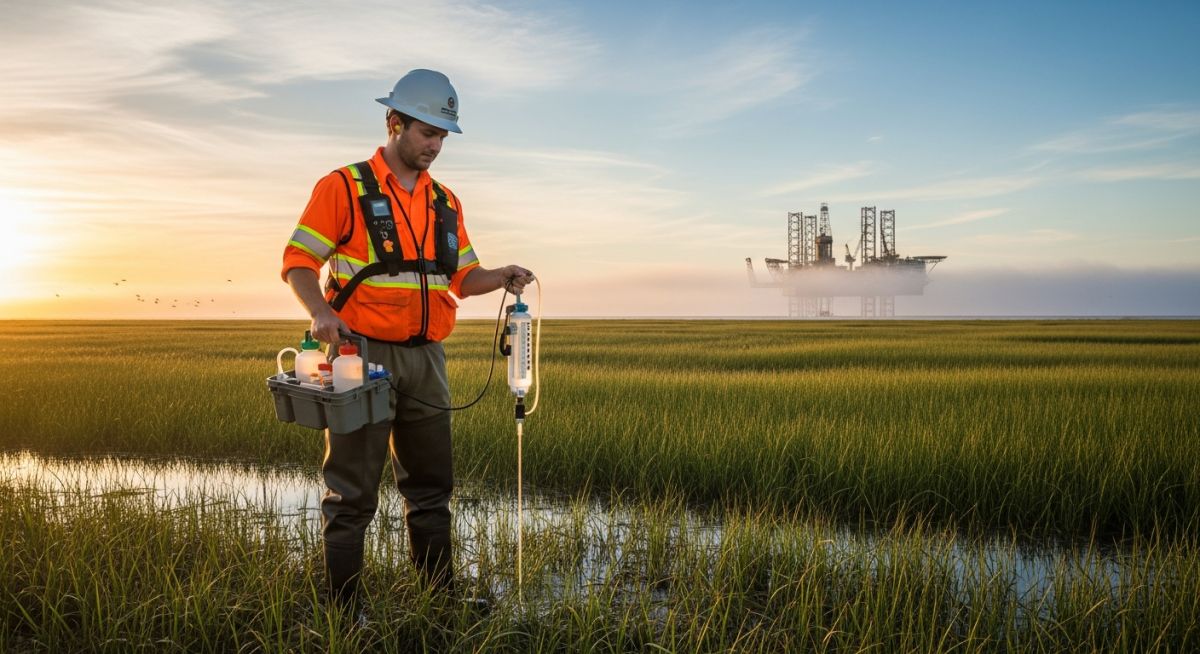
“In 2026, the intersection of microbial science and heavy infrastructure is no longer optional; it is the backbone of sustainable energy extraction. Biologists provide the ecological license to operate in an increasingly scrutinized global landscape.”
— Atul Singla
Expert Knowledge Check: Industrial Biology
Complete Course on
Piping Engineering
Check Now
Key Features
- 125+ Hours Content
- 500+ Recorded Lectures
- 20+ Years Exp.
- Lifetime Access
Coverage
- Codes & Standards
- Layouts & Design
- Material Eng.
- Stress Analysis
Significant Responsibilities of Biologists in the Industrial Sector
In the high-stakes environment of 2026 industrial operations, the Role of Biologists in the Oil and Gas Sector extends far beyond simple conservation. These professionals act as scientific bridges between engineering teams and regulatory bodies. Their primary responsibility lies in conducting rigorous Environmental Baseline Surveys, which serve as the data foundation for any major capital project. By mapping biodiversity and identifying sensitive ecological receptors before ground is broken, biologists allow engineers to design infrastructure that minimizes environmental footprints.
Environmental Baseline Surveys
Utilizing eDNA (environmental DNA) and satellite imagery to catalog species presence and habitat health prior to site development.
Stakeholder Engagement
Translating complex biological data into actionable reports for government agencies (NEPA/CEQA) and local communities.
Restoration Frameworks
Designing multi-decade reclamation plans that ensure industrial sites return to functional, self-sustaining ecosystems after closure.
Furthermore, biologists are now integrated into the ESG (Environmental, Social, and Governance) reporting cycle. They provide the quantitative metrics required for carbon sequestration modeling and biodiversity net-gain (BNG) calculations. Without this biological oversight, modern energy companies risk massive financial penalties and the loss of their "Social License to Operate."
The Biological Integration Cycle in Upstream Operations
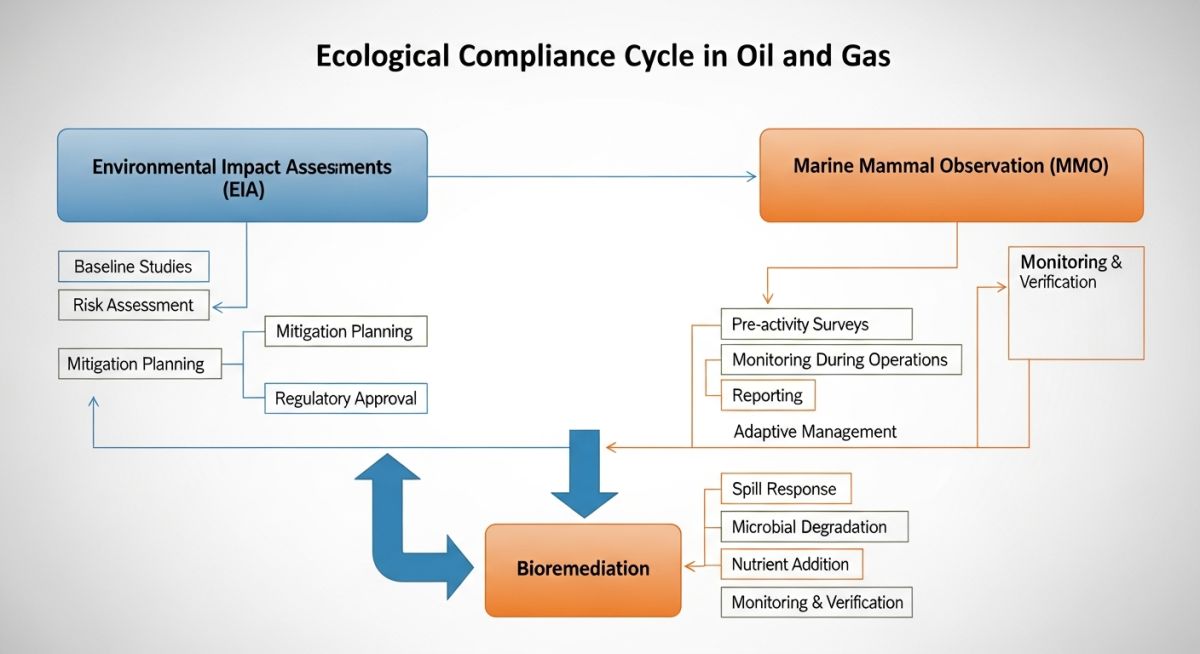
Role of Biologists in the Oil and Gas Sector: Specialized Functions
The diversity of biological expertise required in 2026 reflects the complexity of modern energy projects. Each specialization targets a specific risk factor within the project lifecycle, ensuring that the Role of Biologists in the Oil and Gas Sector remains indispensable for risk mitigation.
1. Field Biology Technician: Data Collection and Science
Technicians are the "boots on the ground," responsible for the physical collection of soil, water, and air samples. In 2026, they use advanced sensors to monitor Produced Water quality and detect microbial-induced corrosion (MIC) precursors in real-time.
2. HAZMAT Technician: Biological Agent Management
Managing hazardous materials isn't just about chemicals; it involves biological hazards and waste management. These specialists ensure that any biological agents used in enhanced oil recovery (EOR) or bioremediation are handled according to strict safety protocols.
3. Protected Species Observer (PSO): Seismic Monitoring
PSOs are critical during offshore exploration. They possess the authority to halt seismic operations if marine mammals, such as whales or turtles, enter the exclusion zone, preventing acoustic injuries and legal non-compliance.
4. Senior Wildlife Biologist: Conservation and Policy
Focusing on macro-level impacts, Senior Biologists develop Biodiversity Mitigation Plans. They work with engineers to design "Wildlife Crossings" and timing windows for construction that avoid critical breeding or migration seasons.
Relevant Codes, Standards, and Ecological Protocols
In the 2026 regulatory landscape, the Role of Biologists in the Oil and Gas Sector is governed by a rigorous framework of international standards. These codes ensure that biological data is quantifiable, auditable, and integrated into the broader Safety and Environmental Management Systems (SEMS). Engineering teams must collaborate with biologists to adhere to specific clauses that dictate how industrial activity interacts with the biosphere.
| Standard / Code | Focus Area | Biological Requirement |
|---|---|---|
| ISO 14001:2015 | Environmental Management | Requires systematic identification of environmental aspects and impacts on local ecosystems. |
| API RP 75 (SEMS) | Operational Safety | Integration of environmental protection into the safety lifecycle of offshore facilities. |
| IPIECA Biodiversity Guide | Ecosystem Services | Guidelines for achieving "No Net Loss" or "Net Gain" of biodiversity in project areas. |
| Equator Principle 4 | Financial Compliance | Mandates rigorous biological impact assessments for project financing eligibility. |
Advanced Biological Engineering and Environmental Science
5. Environmental Manager: Corporate ESG Integration
The Environmental Manager oversees the entire biological compliance portfolio. In 2026, their role focuses on Scope 3 biodiversity impacts, ensuring that the entire supply chain adheres to the same ecological standards as the primary operator.
6. Environmental Scientist: Toxicology and Modeling
Environmental Scientists utilize complex math to predict the dispersion of contaminants. For instance, the Bioaccumulation Factor (BAF) is calculated to determine how chemicals might move through the food chain:
Where CB is the concentration in the biota and CW is the concentration in the water column.
7. Project Biologist: Engineering Team Coordination
Project biologists ensure that "Biological Windows" (specific times of year when work is permitted) are integrated into the project's Gantt charts. They act as the primary liaison between the construction manager and the regulatory agencies.
8. On-Call Biologist: Rapid Response and Remediation
Emergency response teams include on-call biologists who provide immediate guidance during spills. They determine the Shoreline Cleanup Assessment Technique (SCAT), identifying which biological resources are most at risk and which cleanup methods will cause the least secondary damage.
EPCLand YouTube Channel
2,500+ Videos • Daily Updates
Environmental Impact Assessment Calculator
Use this interactive tool to estimate the Biodiversity Risk Index (BRI) for a proposed oil and gas development site. This calculation helps the Role of Biologists in the Oil and Gas Sector by quantifying habitat sensitivity against project footprint.
1 = Industrial/Degraded, 10 = Primary Rainforest/Coral Reef
Lower value = Stronger mitigation (e.g., carbon offsets)
Estimated Biodiversity Risk Index
0.00
Role of Biologists in the Oil and Gas Sector: Failure Case Study
Project Data
- Location: Coastal Wetlands, Gulf of Mexico
- Project Type: Pipeline Expansion (14km)
- Primary Stakeholder: Regional Energy Midstream
- Year: 2026
Failure Analysis
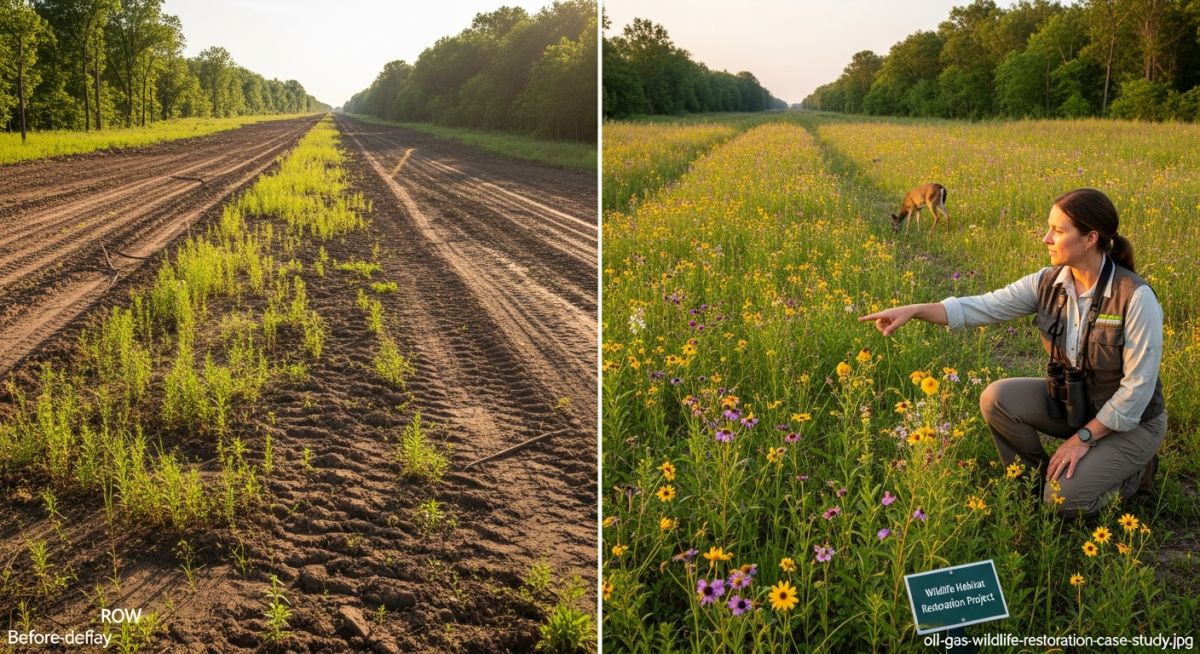
Initial construction proceeded without adequate Project Biologist oversight. Improper hydrological modeling led to saline intrusion in freshwater marshes, causing a 40% loss of native mangrove saplings within six months.
The Biological Fix
A team of Environmental Scientists and Field Biology Technicians was deployed to rectify the imbalance. They installed automated sluice gates to manage water salinity and utilized "Bio-Logs"—engineered coconut fiber rolls impregnated with native seeds—to stabilize the eroding shoreline. Soil toxicity tests were conducted weekly to ensure the pH levels supported rapid microbial colonization.
Lessons Learned
- Biologists must be involved in the Front-End Engineering Design (FEED) phase, not just post-construction.
- Hydrological connectivity is as critical as structural integrity in coastal energy projects.
- Real-time biological monitoring prevents multi-million dollar restoration fines.
Frequently Asked Questions
How does the Role of Biologists in the Oil and Gas Sector impact ESG scores?
In 2026, biologists provide the quantitative data necessary for Environmental Impact Assessment (EIA) and Biodiversity Net Gain (BNG) reporting. By ensuring high-integrity biodiversity mitigation plans, they directly improve a company's Environmental, Social, and Governance (ESG) rating, which is critical for securing project financing.
What qualifications are needed for a Protected Species Observer (PSO) in 2026?
A PSO typically requires a degree in Marine Biology or a related field, plus specific regulatory certifications (such as NMFS or JNCC approval). They must demonstrate expertise in Ecological Monitoring Systems and be proficient with passive acoustic monitoring (PAM) technologies.
Can Biologists assist in oil spill bioremediation?
Yes, Environmental Scientists specializing in microbiology identify and nurture indigenous microbial consortia that naturally degrade hydrocarbons. This Produced Water Bioremediation technique is a cornerstone of modern, low-impact spill response protocols.
Is a Senior Wildlife Biologist involved in pipeline engineering?
Absolutely. A Senior Wildlife Biologist consults on Biodiversity Mitigation Plans during the route selection process. Their input ensures pipelines avoid sensitive nesting grounds or migration corridors, preventing costly legal delays and environmental damage.
📚 Recommended Resources: PIping engineering
Read these Guides
🎓 Advanced Training



Related posts:
![High-grade industrial Wing Nut Types and Applications for mechanical assemblies.]()
Wing Nut Types and Applications: The 2026 Engineering Guide
![Industrial Monorail Crane Systems installed in a modern manufacturing plant 2026.]()
Monorail Crane Systems: Design, Types & 2026 Standards Guide
![Lead engineer performing a Factory Acceptance Test FAT on an industrial skid system 2026]()
Factory Acceptance Test FAT: The 2026 Engineering Guide to Zero-Defect Delivery
![Professional engineering workspace showing a Basis of Design document layout for a 2026 project.]()
Basis of Design: How to Write a BOD for Engineering Projects in 2026
![Industrial Flare Knockout Drum Sizing and installation in a refinery relief system.]()
Flare Knockout Drum Sizing: Design & API 521 Standards (2026 Guide)
![Advanced Reboiler Control Systems in a modern petrochemical refinery 2026.]()
Reboiler Control Systems: Engineering Guide to Precision Control 2026