Comprehensive Guide to Oil and Gas Industry Products
The manufacturing of Oil and Gas Industry Products represents the backbone of modern industrial civilization, reaching far beyond simple transportation fuels. In 2026, the integration of advanced molecular cracking and precision refining allows for the extraction of high-value compounds used in everything from life-saving medical devices to high-performance polymers.
What are the primary Oil and Gas Industry Products?
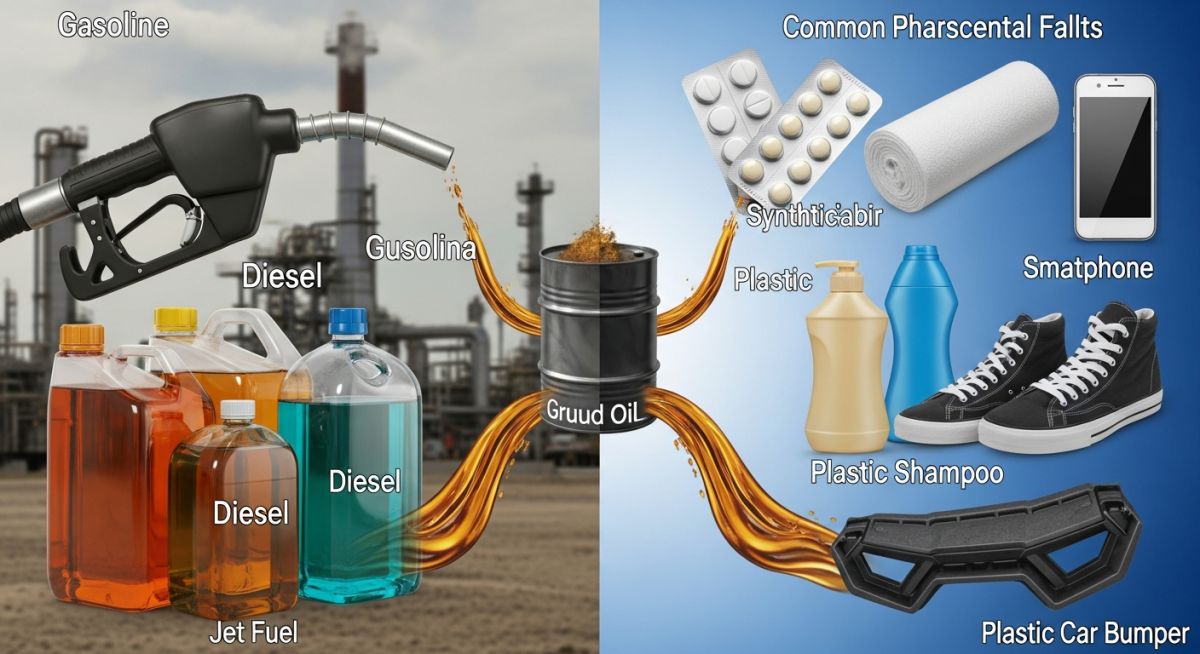
Primary Oil and Gas Industry Products include transport fuels like gasoline, diesel, and jet fuel, alongside industrial lubricants, paraffin waxes, and asphalt. Beyond fuels, petroleum serves as the essential feedstock for petrochemicals, producing plastics, synthetic fibers, pharmaceuticals, and specialized surfactants used across global manufacturing sectors.
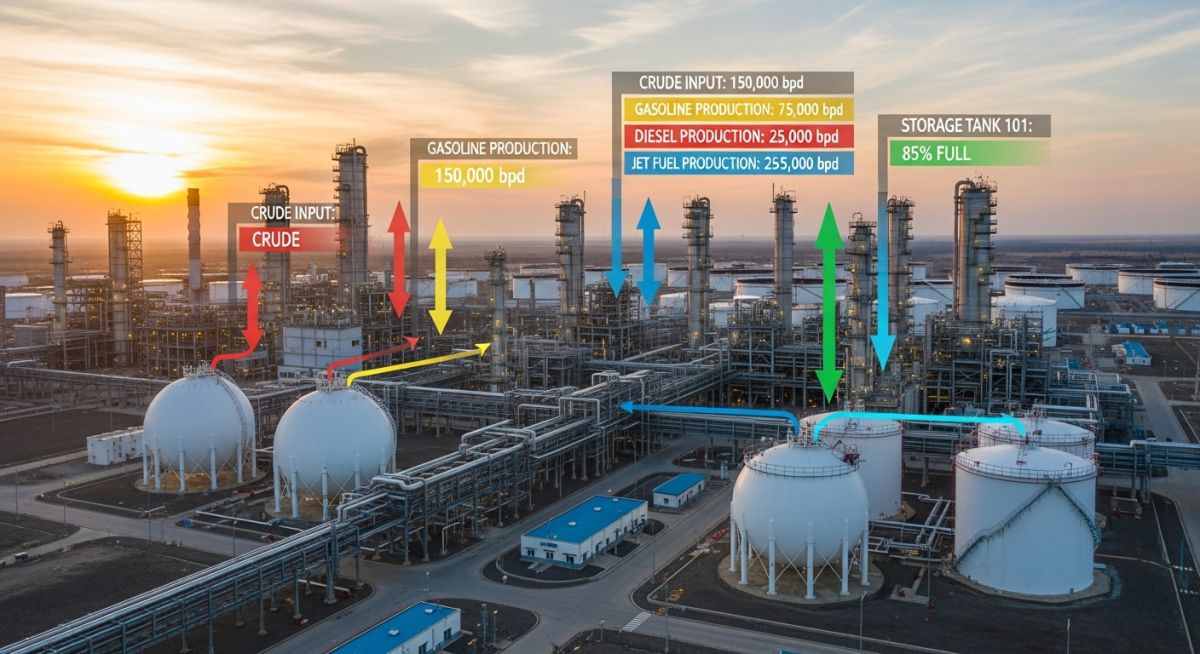
Table of Contents
Technical Knowledge Check
Question 1 of 5
Complete Course on
Piping Engineering
Check Now
Key Features
- 125+ Hours Content
- 500+ Recorded Lectures
- 20+ Years Exp.
- Lifetime Access
Coverage
- Codes & Standards
- Layouts & Design
- Material Eng.
- Stress Analysis
Chemical Properties of Oil and Gas Industry Products
Understanding the molecular architecture of Oil and Gas Industry Products is essential for optimizing refinery yields. Crude oil is primarily composed of hydrocarbons, ranging from simple methane molecules to complex long-chain polymers. In 2026, the industry adheres strictly to ASTM D1298 standards for density and ASTM D445 for kinematic viscosity to ensure product stability.
The fundamental properties of these products are governed by their carbon-to-hydrogen ratios. Light distillates, such as naphtha, possess high volatility and low boiling points, whereas heavier fractions exhibit high molecular weights and significant viscosity. These chemical distinctions determine the specific refining process required—whether it be catalytic cracking or hydrotreating—to transform raw feedstocks into marketable Oil and Gas Industry Products.
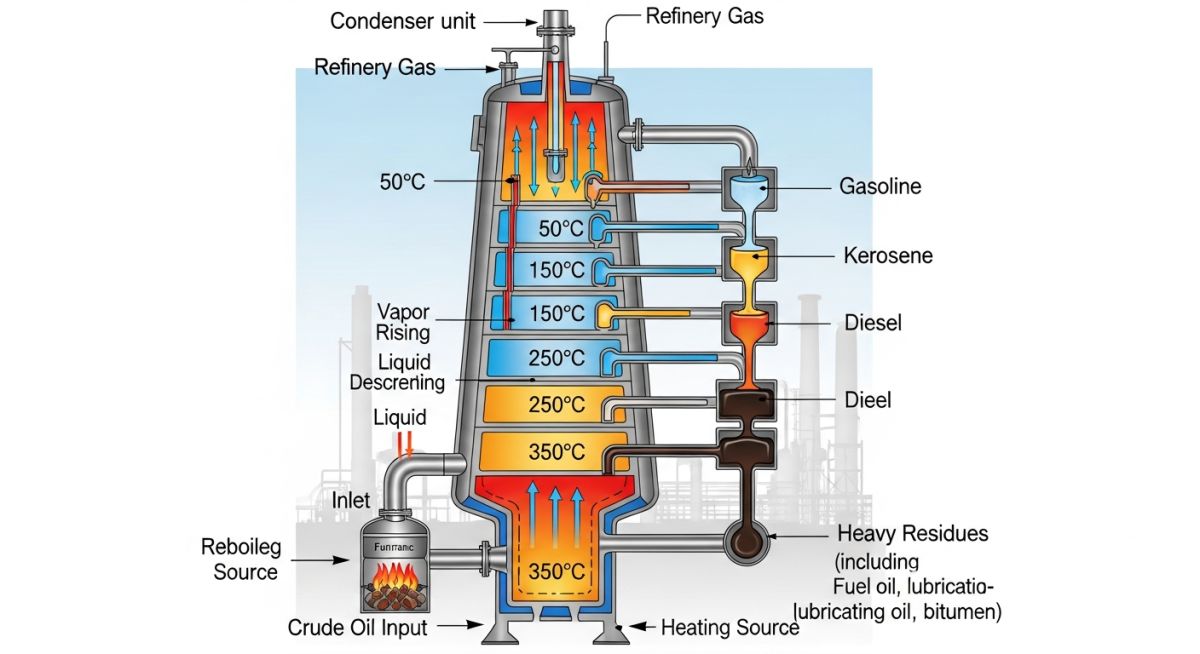
Figure 1: Schematic of the Fractional Distillation Tower showing temperature-dependent separation of hydrocarbon streams.
Analysis of Top Oil and Gas Industry Products and Their Uses
The diversification of Oil and Gas Industry Products ensures that nearly every modern industrial sector remains operational. The following sections detail the primary distillates produced through Hydrocarbon Fractionation (LSI).
Gasoline (Motor Spirit) Fractionation
Gasoline remains one of the most critical Oil and Gas Industry Products globally. It consists of a blend of C4 to C12 hydrocarbons. In 2026, refineries utilize Catalytic Reforming to increase octane ratings, ensuring compatibility with high-compression engines while minimizing environmental emissions.
Jet Fuel and Aviation Kerosene Standards
Aviation remains heavily reliant on Crude Oil Distillates (LSI). Jet A-1 fuel must meet stringent freeze-point and flash-point specifications defined by ASTM D1655. This product is a middle distillate, extracted at temperatures between 150 degrees Celsius and 275 degrees Celsius.
Diesel Fuel and Industrial Heating Oil Requirements
As a primary Oil and Gas Industry Product for logistics, diesel fuel is characterized by its cetane number. Modern Ultra-Low Sulfur Diesel (ULSD) undergoes intense hydrodesulfurization to meet 2026 environmental protocols, significantly reducing the sulfur content to below 10 ppm (parts per million).
Heavy Lubricating Oils and Grease Formulations
Industrial Lubricants (LSI) are essential for reducing friction in mechanical systems. These products are derived from heavy vacuum gas oils. Engineers prioritize the Viscosity Index (VI) to ensure the oil maintains its protective film across wide temperature variances, a critical factor for offshore Oil and Gas Industry Products.
Paraffin Waxes and Microcrystalline Derivatives
Paraffin wax is a solid Oil and Gas Industry Product obtained by de-waxing lubricating oil stocks. Its high resistance to moisture and excellent electrical insulation properties make it vital for the packaging and electronics industries.
Bitumen and Asphalt for Infrastructure
Bitumen, the heaviest of Oil and Gas Industry Products, serves as the primary binder for road construction. Known for its waterproof and adhesive qualities, it represents the residual fraction of the distillation process, often referred to as the bottom-of-the-barrel product.
Petrochemical Derivatives: Indirect Oil and Gas Industry Products
Beyond combustion and lubrication, Oil and Gas Industry Products serve as the molecular building blocks for Polymer Manufacturing (LSI). By utilizing Refining Process Byproducts (LSI) such as ethylene, propylene, and benzene, the industry supports a vast ecosystem of consumer and medical goods.
| Feedstock Derivative | Common Oil and Gas Industry Products | Primary Application |
|---|---|---|
| Polyethylene | Shampoo Bottles & Packaging | Consumer Durables |
| Benzene/Phenol | Aspirin & Pharmaceuticals | Medical Synthesis |
| Synthetic Polymers | Polyester & Nylon Clothing | Textile Engineering |
| Polycarbonate | Optical Discs (CDs/DVDs) | Digital Media Storage |
Polymers in Tech: CDs, DVDs, and Electronics
Even as digital streaming dominates, high-performance Oil and Gas Industry Products like polycarbonates remain vital for physical data storage and electronics housing. These materials require high thermal stability and optical clarity.
Food Grade Additives: Petroleum in Chewing Gum
Many consumers are unaware that food-grade Petrochemical Derivatives (LSI) provide the elastic “chew” in gum. Petroleum wax and synthetic rubber bases are refined to extreme purity levels to meet global safety standards.
Pharmaceutical Synthesis: Aspirin and Medical Compounds
Benzene and other Oil and Gas Industry Products are critical precursors in pharmaceutical manufacturing. Aspirin (acetylsalicylic acid) synthesis relies on phenol, which is primarily derived from cumene, a petroleum-based hydrocarbon.
Synthetic Fibers: Petroleum-based Clothing and Textiles
Over 60 percent of global apparel is manufactured using synthetic fibers derived from Oil and Gas Industry Products. Polyester, made from purified terephthalic acid, offers durability and moisture-wicking properties that natural fibers often lack.
Engineering Calculation: API Gravity
The quality of crude used to produce Oil and Gas Industry Products is often measured by its API Gravity. The formula for API gravity at 60 degrees Fahrenheit is:
API Gravity = (141.5 / SG at 60 degrees F) – 131.5
Where:
SG = Specific Gravity of the petroleum liquid.
A higher API value indicates a lighter, often more valuable feedstock for high-demand Oil and Gas Industry Products.
Biomedical Applications: Dentures and Prosthetics
Acrylic resins used in dentures and prosthetics are specialized Oil and Gas Industry Products. These biocompatible polymers must withstand significant mechanical stress and chemical exposure within the human body.
Future Outlook for Oil and Gas Industry Products
The year 2026 marks a transition toward “Carbon-Circular” Oil and Gas Industry Products. Refineries are increasingly integrating chemical recycling to turn waste plastics back into virgin-quality feedstocks, ensuring that the lifecycle of petroleum-based materials remains sustainable in a decarbonizing economy.
Oil and Gas Industry Products: API & Density Calculator
Determine the 2026 industry classification for Oil and Gas Industry Products by calculating API Gravity from Specific Gravity (SG).
Engineering Note: API Gravity is inversely proportional to density. Standard Oil and Gas Industry Products like Gasoline typically range from 45 to 70 API, while Bitumen often falls below 10 API. Formula used: API = (141.5 / SG) – 131.5.
Don't miss this video related to Oil and Gas Industry Products
Summary: In this video, we delve into the differences between a refinery and a petrochemical plant. Test your knowledge with our 10 ......
Case Study: Maximizing Yield of High-Value Oil and Gas Industry Products
Project Data
In 2026, a major North Sea refinery initiated a facility-wide upgrade to shift production from heavy fuel oils to high-demand Oil and Gas Industry Products like ultra-low sulfur diesel and petrochemical-grade naphtha.
Failure Analysis
Initial assessments found that 15 percent of potential light-end Oil and Gas Industry Products were being lost in the vacuum residue due to inefficient heat exchange and outdated catalyst performance in the cracking unit.
Engineering Fix & Lessons Learned
- Advanced Catalytic Cracking: Implemented a 2026-spec zeolite catalyst to increase the conversion rate of heavy gas oils into Oil and Gas Industry Products with higher market value.
- Digital Twin Integration: Real-time monitoring of Hydrocarbon Fractionation (LSI) zones allowed for 0.5 percent precision in temperature control, minimizing product degradation.
- Result: The refinery achieved a 12 percent increase in the yield of Refining Process Byproducts (LSI) specifically intended for medical-grade polymer synthesis.
Frequently Asked Questions (FAQs) about Oil and Gas Industry Products
Which product derived from Petroleum has been used the most frequently daily?
Do you know how to characterize the chemical properties of Petroleum?
How many products can you think of related to the oil industry?
What are the primary refining process byproducts?
Conclusion
In 2026, the spectrum of Oil and Gas Industry Products remains the foundation of global manufacturing and energy infrastructure. From the fuels that drive logistics to the petrochemical feedstocks that enable medical breakthroughs, the ability to refine crude oil with precision is a testament to modern engineering. As we move toward more sustainable refining practices, the role of these products continues to evolve, ensuring that the Oil and Gas Industry Products of the future are cleaner, more efficient, and fully integrated into a circular economy.
📚 Recommended Resources: Oil and Gas Industry Products
Read these Guides
- 📄 Complete Guide to Epoxy Pipe Coating: Types, Applications, Pros and Cons
- 📄 What is a Fired Equipment? Types of Fired Equipment for Oil and Gas Industries (2026)
- 📄 Heat Exchanger Fouling Factor: Significance, Calculation & 2026 Standards
- 📄 What is Process Piping? Definition, Materials, and Codes (2026 Guide)
🎓 Advanced Training


Related posts:
![High-grade industrial Wing Nut Types and Applications for mechanical assemblies.]()
Wing Nut Types and Applications: The 2026 Engineering Guide
![Industrial Monorail Crane Systems installed in a modern manufacturing plant 2026.]()
Monorail Crane Systems: Design, Types & 2026 Standards Guide
![Lead engineer performing a Factory Acceptance Test FAT on an industrial skid system 2026]()
Factory Acceptance Test FAT: The 2026 Engineering Guide to Zero-Defect Delivery
![Professional engineering workspace showing a Basis of Design document layout for a 2026 project.]()
Basis of Design: How to Write a BOD for Engineering Projects in 2026
![Industrial Flare Knockout Drum Sizing and installation in a refinery relief system.]()
Flare Knockout Drum Sizing: Design & API 521 Standards (2026 Guide)
![Advanced Reboiler Control Systems in a modern petrochemical refinery 2026.]()
Reboiler Control Systems: Engineering Guide to Precision Control 2026