The Future of Green Hydrogen in Shipping: 2026 Engineering & Infrastructure Guide
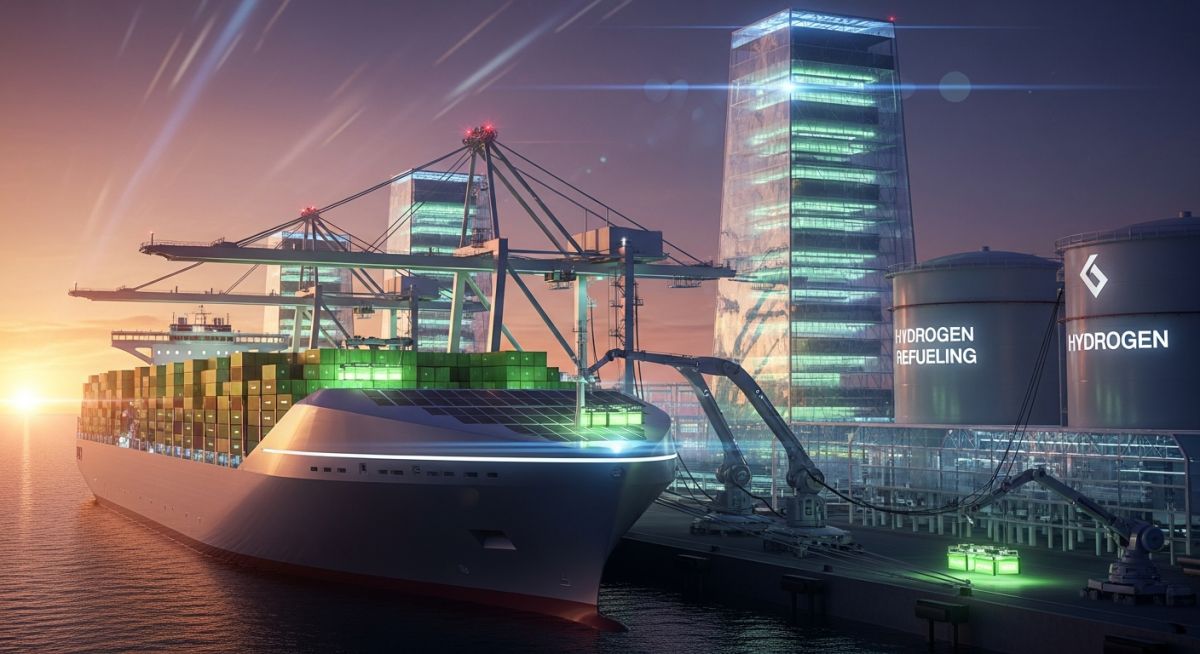
Imagine your fleet is facing a 200% carbon tax hike as IMO 2050 regulations tighten. Your current heavy fuel oil (HFO) assets are becoming liabilities overnight. Why are leading shipowners like Maersk and NYK Line betting billions on Green Hydrogen in Shipping instead of just batteries? It’s not just about the environment; it’s about the physics of energy density and the engineering reality of transoceanic logistics.
Key Engineering Takeaways
- Hydrogen as a Feedstock: 2026 marks the shift where hydrogen is primarily used to create Green Ammonia for deep-sea voyages.
- Engine Architecture: Transition from traditional ICE to Dual-Fuel systems capable of high-pressure hydrogen injection.
- Infrastructure Reuse: Utilizing existing LPG carriers and port terminals to accelerate the hydrogen bunkering roadmap.
What is the role of Green Hydrogen in Shipping?
In 2026, Green Hydrogen in Shipping serves as the primary zero-emission fuel for coastal vessels and the essential chemical feedstock for E-fuels like Green Ammonia and Methanol. It enables the maritime industry to meet IMO 2050 targets by replacing high-carbon fossil fuels with hydrogen-based propulsion systems and fuel cells.
“The industry has moved past the ‘if’ and into the ‘how.’ In my two decades of energy infrastructure, I’ve never seen a shift as rapid as the Hydrogen-to-Ammonia pivot. The engineering challenge isn’t just the fuel; it’s the cryogenic storage and material compatibility at the bunkering stations.”
— Atul Singla, Founder, Epcland
Complete Course on
Piping Engineering
Check Now
Key Features
- 125+ Hours Content
- 500+ Recorded Lectures
- 20+ Years Exp.
- Lifetime Access
Coverage
- Codes & Standards
- Layouts & Design
- Material Eng.
- Stress Analysis
Engineering Challenge: Hydrogen Knowledge Check
Question 1 of 5In 2026, why is Green Ammonia often preferred over pure liquid hydrogen for deep-sea Green Hydrogen in Shipping applications?
Fundamental Chemistry: Green Hydrogen in Shipping vs. Green Ammonia
To engineer effective maritime propulsion, we must look beyond the fuel tank and into the molecular structure. While Green Hydrogen in Shipping provides the zero-carbon energy source, its transformation into Green Ammonia (NH3) drastically alters its physical handling and combustion characteristics.
What is Green Hydrogen?
Hydrogen (H2) is the lightest element in the universe. In a maritime context, “Green” refers to its production via electrolysis powered by renewable energy, splitting water (H2O) into oxygen and hydrogen.
- Molecular Weight: 2.016 g/mol
- Boiling Point: -252.9°C
- Auto-ignition Temp: 585°C
What is Green Ammonia?
Ammonia (NH3) is a compound of nitrogen and hydrogen. By combining Green Hydrogen in Shipping with nitrogen from the air via the [Haber-Bosch process](https://www.britannica.com), we create a liquid energy carrier.
- Molecular Weight: 17.031 g/mol
- Boiling Point: -33.34°C
- Flame Speed: Very Low (0.015 m/s)
Unique Engineering Features
| Feature | Hydrogen (H2) | Ammonia (NH3) |
|---|---|---|
| Leak Behavior | Buoyant; rises and dissipates rapidly in air. | Heavier than air when cold; forms toxic ground-level clouds. |
| Combustion | Invisible flame; extremely high flame speed. | Difficult to ignite; requires “Pilot Fuel” to sustain. |
| Material Risk | Embrittlement of high-strength steels. | Highly corrosive to copper and brass alloys. |
| Global Use | Emerging fuel for Fuel Cells & Short Sea. | Global commodity; massive existing tanker fleet. |
Engineering Note: When designing for Green Hydrogen in Shipping, remember that Hydrogen has the highest energy per unit mass (120 MJ/kg), but Ammonia wins on energy per unit volume in liquid form, making it the practical choice for trans-Pacific routes.
Primary Roles of Green Hydrogen in Shipping Ecosystems
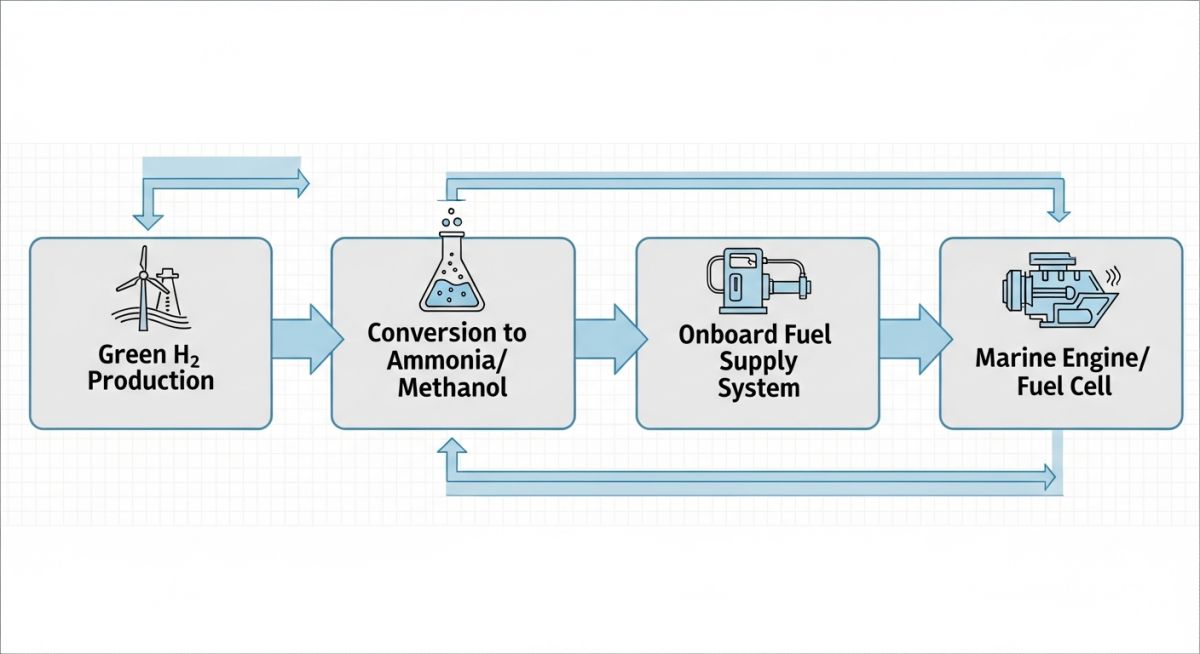
As of 2026, the maritime sector is no longer debating the feasibility of hydrogen; it is actively engineering the transition. The role of Green Hydrogen in Shipping has evolved into a sophisticated hierarchy of energy utilization. For short-sea shipping, such as ferries and tugboats, hydrogen is utilized in its gaseous form to power high-efficiency fuel cells. However, for the backbone of global trade—ocean-going container ships and tankers—hydrogen serves as the critical chemical precursor for Green Ammonia (NH3) and Green Methanol (CH3OH).
The engineering logic is driven by energy density. Liquid hydrogen requires approximately seven times the storage volume of conventional marine diesel to provide the same range. By converting Green Hydrogen in Shipping into ammonia, engineers can utilize existing cryogenic tank technologies developed for the LPG industry, effectively bypassing the massive volumetric constraints of pure H2.
Technological Pathways: Fuel Cells vs. ICE for Green Hydrogen in Shipping
The choice between a Hydrogen Fuel Cell and a Hydrogen Internal Combustion Engine (ICE) depends heavily on the vessel’s operational profile. In 2026, we see a clear divergence in hardware deployment:
1. Hydrogen Fuel Cells (PEM & SOFC)
Utilizing Proton Exchange Membrane (PEM) technology, these systems convert chemical energy directly into electricity with zero moving parts. This path is favored for passenger vessels due to its near-silent operation and 60% electrical efficiency. Leading manufacturers like TECO 2030 are now delivering megawatt-scale modules specifically for Green Hydrogen in Shipping.
2. Hydrogen-Ready Dual-Fuel Engines
For heavy-duty applications, the industry relies on modified two-stroke and four-stroke engines. These units use a “Pilot Fuel” injection (often a small amount of bio-diesel) to initiate combustion, followed by a high-pressure injection of hydrogen. This allows for a flexible transition where ships can still run on traditional fuels if Green Hydrogen in Shipping infrastructure is unavailable at a specific port.
The integration of these technologies requires a complete redesign of the Onboard Fuel Supply System (FGSS). Engineers must manage extreme pressures (up to 700 bar for gas) or cryogenic temperatures (-253°C for liquid H2), necessitating double-walled vacuum-insulated piping and advanced leak detection sensors to ensure crew safety and vessel integrity.
Advanced Engineering: Hydrogen vs. Ammonia for Global Fleets
In 2026, the maritime industry has reached a consensus: Green Hydrogen in Shipping is the molecule of choice, but its physical state determines its destination. Engineering teams must navigate the trade-offs between the rapid combustion of hydrogen and the high toxicity but superior energy density of green ammonia. To meet IMO Tier III and MARPOL Annex VI requirements, these fuels require distinct hardware configurations.
| Parameter | Liquid Hydrogen (LH2) | Green Ammonia (NH3) | Marine Gas Oil (MGO) |
|---|---|---|---|
| Storage Temp | -253°C | -33.4°C | Ambient |
| Energy Density (MJ/L) | 8.5 | 12.7 | 36.6 |
| Volume Factor (vs MGO) | 4.3x | 2.9x | 1.0x |
| Primary Emission | Water Vapor | N2 + Water (+NOx) | CO2 + SOx + PM |
Leveraging Existing Infrastructure for Green Hydrogen in Shipping
A critical breakthrough in 2026 is the repurposing of LPG (Liquefied Petroleum Gas) infrastructure. Since ammonia and LPG share similar thermodynamic properties, existing refrigerated storage tanks and specialized [LPG Carriers](https://www.wartsila.com) are being converted with minimal CAPEX. This “Ammonia Ready” strategy allows ports to scale Green Hydrogen in Shipping bunkering without building entirely new terminals from scratch.
Compliance Check: ASME & API Standards
Marine hydrogen systems must adhere to strict international engineering standards to ensure safety in volatile maritime environments:
- ● ASME B31.12: Hydrogen Piping and Pipelines
- ● IGC Code: International Gas Carrier Code
- ● API RP 500: Classification of Locations for Electrical Installations
- ● ISO/TR 15916: Basic considerations for the safety of hydrogen systems
Overcoming Low Energy Density in Vessel Design
The “Volume Problem” is the greatest hurdle for Green Hydrogen in Shipping. To maintain the same cargo capacity while carrying bulkier hydrogen fuel, naval architects are utilizing Type C independent tanks and integrating fuel storage into the ship’s superstructure. In 2026, we are seeing the rise of “Jumbo-Frames”—ships specifically lengthened to accommodate hydrogen storage modules without sacrificing TEU (Twenty-foot Equivalent Unit) slots.
Maritime Fuel Storage Estimator (2026)
Calculate the required storage volume for Green Hydrogen in Shipping vs. Traditional Marine Gas Oil (MGO).
*Calculation based on average Lower Heating Values (LHV) for 2026 engineering standards. Results represent theoretical tank volumes before accounting for BOG (Boil-Off Gas) management systems.
Don’t miss this video related to Green Hydrogen

Summary: Master Piping Engineering with our complete 125+ hour Certification Course: ……
Green Hydrogen in Shipping Failure Case Study
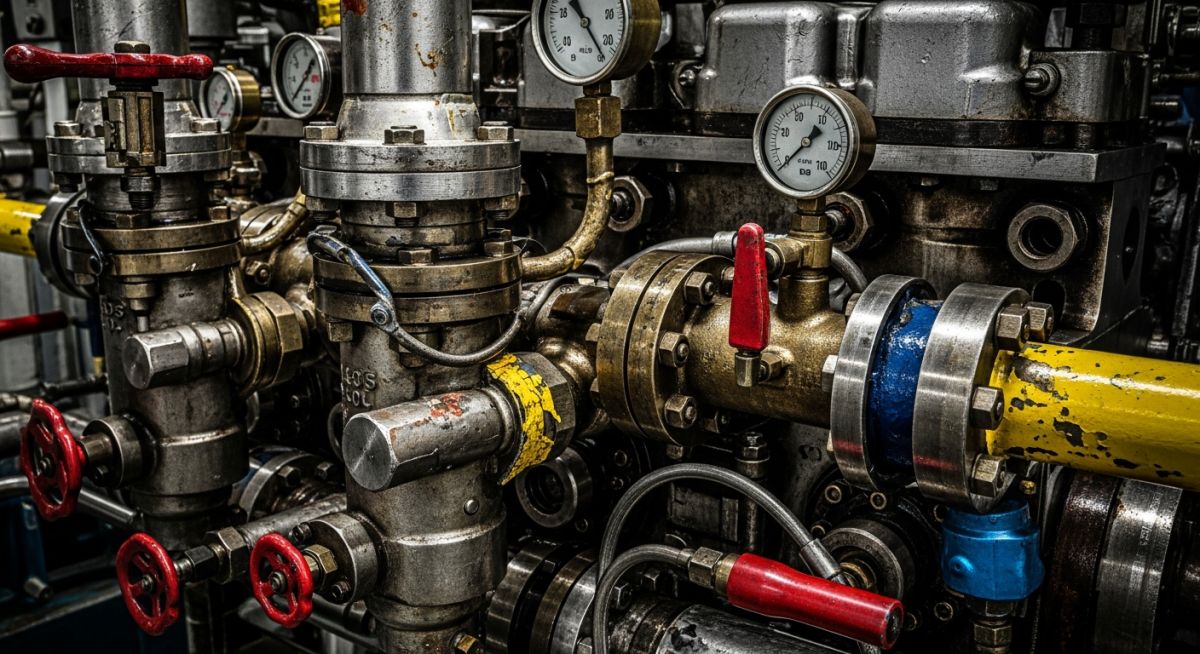
Scenario: Material Fatigue in Hydrogen-Ready VLGC Retrofit
In a 2025 pilot project, a Very Large Gas Carrier (VLGC) was retrofitted to carry Green Ammonia—a hydrogen derivative—as its primary fuel. While the storage tanks (Type C) were theoretically compatible, the engineering team overlooked the specific Stress Corrosion Cracking (SCC) risks associated with ammonia in the presence of trace oxygen in the fuel supply lines.
The Engineering Failure
Utilization of standard carbon steel valves without specialized nickel-alloy coatings led to micro-fractures in the high-pressure manifold. This resulted in a localized leak during a bunkering operation in Singapore.
The 2026 Resolution
Engineers implemented Double-Walled Vacuum Insulated Piping and transitioned all gaskets to PTFE-based materials. Additionally, real-time nitrogen purging systems were automated to keep oxygen levels below 1ppm.
Key Lesson Learned:
“Successful implementation of Green Hydrogen in Shipping derivatives requires more than just tank compatibility; it demands a full audit of the Fuel Supply System (FGSS) metallurgy. Standard LPG components often fail the long-term corrosion resistance required for high-purity green fuels.”
Expert Insights: Lessons from 20 years in the field
-
●
The Energy Density Reality: Don’t design for pure hydrogen on long-haul routes. The volumetric penalty is too high. 2026 engineering focus remains on Green Ammonia for anything over 2,000 nautical miles.
-
●
Metallurgy is King: Hydrogen embrittlement is not a myth—it is a maintenance nightmare. Always specify 316L Stainless Steel or specialized polymer liners for high-pressure Green Hydrogen in Shipping piping systems.
-
●
Bunkering Synchronicity: The ship is only half the battle. If the port infrastructure doesn’t support cryogenic vapor return, your refueling window will double, killing your operational ROI.
Frequently Asked Questions
How does Green Hydrogen in Shipping compare to LNG? ▼
While LNG reduces CO2 by ~20%, it still releases methane slip. Green Hydrogen in Shipping offers a true zero-carbon pathway, though it requires significantly more storage volume and more complex cryogenic handling than LNG.
Can existing marine diesel engines run on Green Hydrogen? ▼
Not without a major retrofit. A standard diesel engine requires new cylinder heads, high-pressure common rail injectors, and an SCR system to handle the unique combustion properties and NOx profile of Green Hydrogen in Shipping.
Is Green Ammonia safer than Liquid Hydrogen for crews? ▼
It’s a trade-off. Hydrogen is highly explosive but dissipates quickly. Ammonia is toxic and corrosive but easier to detect by smell. Both require advanced Gas Detection Systems and specialized crew PPE in 2026.
Why is your separator still showing carryover in a hydrogen fuel system? ▼
Carryover often occurs due to flow velocity spikes or improper baffle plate spacing within the Fuel Gas Supply System (FGSS). Ensure your knock-out drum is sized for the specific density of gaseous hydrogen at the operating pressure.
How do I calculate the ROI on a Green Hydrogen retrofit? ▼
The ROI in 2026 is driven by carbon credits and port fee waivers. Calculate the savings from avoiding EU ETS (Emissions Trading System) fines versus the increased CAPEX of the Green Hydrogen in Shipping fuel system.
What is the “Slip” risk in Ammonia-powered vessels? ▼
Ammonia slip refers to unburnt ammonia escaping the exhaust. In 2026, this is mitigated through Selective Catalytic Reduction (SCR) units that must be specifically tuned for the faster combustion cycles of hydrogen-based fuels.