Refinery Rescue: How We Quelled a CRU Catalyst Runaway Reaction and Lessons Learned
Catalytic Reforming Units (CRUs) are the heart of many refineries, transforming low-octane naphtha into high-octane gasoline components and valuable aromatics. Their efficient operation is paramount, but it comes with inherent risks, especially during the critical catalyst regeneration phase. Unforeseen incidents, such as a catalyst runaway reaction, can quickly escalate, jeopardizing safety, equipment, and production schedules. This article delves into a real-world account of such an incident, providing a practical understanding of its causes, the emergency measures taken, and the invaluable lessons learned to enhance refinery safety and operational integrity.
Table of Contents
1. What is the primary purpose of a Catalytic Reforming Unit (CRU) in a refinery?
2. Why is catalyst regeneration necessary in a CRU?
3. What is a “runaway reaction” in the context of a CRU catalyst regeneration?
4. Which of the following can lead to a CRU catalyst runaway reaction?
5. What is a common immediate emergency response to a runaway reaction in a CRU?
Answer: During CRU catalyst regeneration, I would meticulously monitor parameters like reactor inlet and outlet temperatures, oxygen concentration in the regeneration gas, catalyst bed temperatures (using thermocouples), pressure drop across the bed, and flow rates of air and inert gas. Trends in these parameters, especially rapid changes in temperature or oxygen spikes, are critical indicators of potential issues.
Answer: In such a scenario, the process engineer’s immediate role is to assess the deviation, confirm it with operators, and identify the root cause quickly. This involves checking P&IDs, trend data, and alarm logs. Concurrently, they must communicate clearly with operations and management, provide technical guidance for emergency procedures (e.g., initiating nitrogen purge), and collaborate on a mitigation plan. Post-incident, they would lead or contribute to the root cause analysis and implement corrective actions.
Answer: I would approach it systematically, possibly using tools like the 5 Whys or Fishbone diagram. Key steps would include: gathering all relevant data (DCS trends, log entries, maintenance records), interviewing involved personnel, inspecting equipment (like the regeneration air compressor in the case study), analyzing catalyst samples for damage, and reviewing operating procedures and training. The goal is to identify all contributing factors and the fundamental cause, not just the symptoms.
Answer: Prevention is multi-faceted. It includes robust process control systems with reliable sensors and interlocks, stringent maintenance programs for critical equipment like compressors and valves, regular calibration of instruments, comprehensive operating procedures, and continuous training for operators on both routine and emergency scenarios. Implementing advanced process control and anomaly detection can also significantly enhance safety.
Answer: Cross-departmental communication is absolutely critical. During an incident, clear, concise, and timely communication prevents misunderstandings and ensures a coordinated response. Key departments involved include Operations (leading the immediate response), Process Engineering (for technical analysis and guidance), Maintenance (for equipment issues), Safety (for personnel safety and incident investigation), and Management (for overall oversight and decision-making on broader impact). Regular updates and defined communication protocols are essential.
Ready to fast-track your career? Dive into the most comprehensive course on the market.
Explore the Complete Piping Engineering CoursePro-Tip From The Field
During a scheduled catalyst regeneration in our Catalytic Reforming Unit (CRU), we encountered an unexpected rise in regeneration temperature, indicating an uncontrolled burn. We immediately initiated emergency procedures to quench the reaction and prevent damage to the catalyst bed and reactor. It was later determined that a minor leak in the regeneration air compressor introduced excessive oxygen, leading to the runaway reaction. This incident extended our turnaround by 72 hours and required additional catalyst sampling to confirm its integrity. This experience highlighted the critical importance of rigorous preventive maintenance and continuous monitoring of even seemingly minor components, as their failure can have significant operational and financial repercussions.
Understanding Catalytic Reforming Units (CRUs) and Regeneration
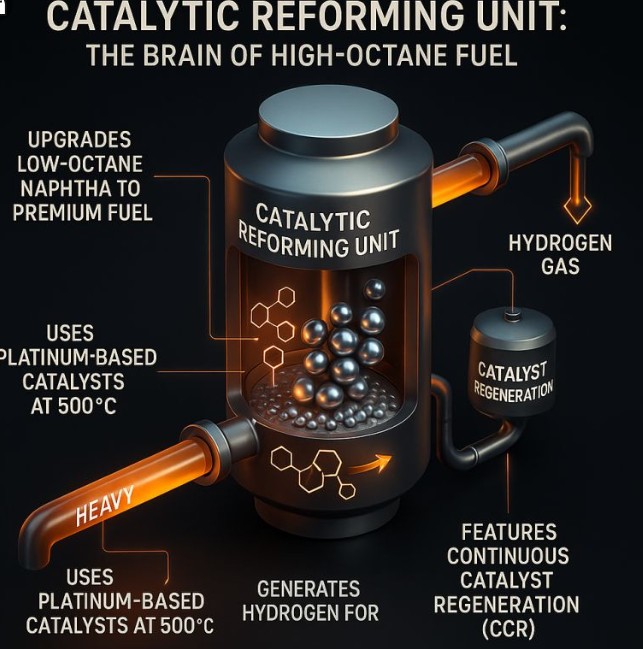
Catalytic Reforming Units are pivotal in the petrochemical industry, designed to convert low-octane naphtha into high-octane reformate, which is a key blending component for gasoline. Beyond gasoline production, CRUs also yield valuable aromatic hydrocarbons like benzene, toluene, and xylenes, crucial for the chemical industry. The process involves passing naphtha vapor over a platinum-rhenium catalyst at high temperatures and pressures.
The Core Function of CRUs in Refineries
The primary function of a CRU is to improve the octane rating of gasoline through several reactions: dehydrogenation of naphthenes to aromatics, isomerization of paraffins, and hydrocracking of heavier hydrocarbons. These reactions occur over a noble metal catalyst, typically platinum-based, supported on an alumina base. The efficiency of these reactions directly impacts the quality and quantity of refinery products.
The Importance and Process of Catalyst Regeneration
Over time, the catalyst in a CRU loses activity due to the accumulation of coke (carbon deposits) on its surface. To restore its activity, a regeneration process is periodically performed. This typically involves carefully controlled burning of the coke with a dilute oxygen stream (often air diluted with nitrogen or steam) at elevated temperatures. The regeneration process is highly exothermic, meaning it generates significant heat. Precise control of temperature and oxygen concentration is crucial to prevent uncontrolled burning and potential damage to the catalyst or reactor.
Common Challenges and Risks in CRU Operations
CRU operations, especially regeneration, are inherently challenging due to the high temperatures, pressures, and the reactive nature of the process. Risks include catalyst deactivation, localized overheating, hot spots, and, most critically, runaway reactions. A runaway reaction occurs when the rate of heat generation from coke combustion exceeds the rate of heat removal, leading to a rapid, uncontrolled temperature increase. Such an event can irreversibly damage the catalyst, distort reactor internals, and pose severe safety hazards.
| Parameter | Typical Regeneration Range | Danger Threshold / Indicator of Runaway |
|---|---|---|
| Regeneration Temperature | 450-550 °C | > 600 °C (rapid increase) |
| Oxygen Concentration (inlet) | 0.5-2.0 vol% | > 2.5 vol% (uncontrolled spike) |
| Pressure Drop Across Bed | Stable / Gradually increasing | Sudden drop or rapid increase |
| CO/CO2 Ratio (off-gas) | Monitoring for completeness of burn | Abnormal spikes (indicating incomplete combustion or excessive burning) |
| Catalyst Bed Temperature Profiles | Uniform progression | Localized hot spots, sharp peaks |
Case Study: Navigating a Catalyst Runaway Reaction
Even with stringent protocols, unexpected incidents can occur. The following case study details a real-world scenario of a CRU catalyst runaway reaction, highlighting the immediate response, investigation, and impact.
Emergency Response Protocols: Quenching the Reaction
Upon detection of the rapid temperature excursion and confirmation of the uncontrolled burn in the catalyst bed, the operations team immediately initiated emergency shutdown procedures. The primary goal was to quench the reaction and prevent further damage. This involved:
- Stopping the flow of regeneration air to starve the reaction of oxygen.
- Introducing a high flow of inert gas, typically nitrogen, into the reactor to rapidly cool the catalyst bed and displace any remaining oxygen.
- Monitoring reactor temperatures closely to ensure the runaway reaction was brought under control and temperatures were normalizing.
Root Cause Analysis: Identifying the Compressor Leak
Post-incident, a comprehensive root cause analysis was launched. While initial focus was on process control issues, the investigation eventually traced the problem to a seemingly minor, yet critical, mechanical failure: a subtle leak in the regeneration air compressor. This leak allowed a higher-than-specified volume of oxygen to enter the regeneration gas stream, leading to an uncontrolled and accelerated combustion of coke on the catalyst, initiating the runaway reaction. This highlighted how a small mechanical integrity issue could lead to a significant process upset.
Impact Assessment: Turnaround Extension and Catalyst Integrity Checks
The runaway reaction had immediate and significant consequences. The emergency procedures and subsequent investigation extended the planned unit turnaround by 72 hours, resulting in substantial production losses. Furthermore, concerns about the catalyst's integrity necessitated additional catalyst sampling and extensive testing to confirm its activity and structural stability after enduring extreme temperatures. Fortunately, the rapid response limited the damage, and the catalyst was deemed reusable after thorough inspection.
Lessons Learned and Best Practices for Prevention
This incident provided invaluable lessons, reinforcing the importance of a multi-faceted approach to safety and operational excellence in CRU units.
Enhancing Monitoring Systems for Regeneration Parameters
The incident underscored the need for even more vigilant and perhaps advanced monitoring of regeneration parameters. Implementing redundant temperature sensors, enhancing real-time data analytics for trend analysis, and setting tighter alarm limits for oxygen concentration and temperature deviations can provide earlier warnings. Advanced Process Control (APC) systems capable of predictive analytics and rapid response can also be beneficial.
Importance of Rigorous Maintenance and Leak Detection (specifically for air compressors)
The root cause directly pointed to a maintenance oversight. This experience emphasized that seemingly minor equipment, such as regeneration air compressors, requires meticulous preventive maintenance, including regular leak detection and integrity checks. A robust mechanical integrity program, extending to all auxiliary equipment feeding critical processes, is non-negotiable for preventing such incidents.
Training and Preparedness for Unforeseen Operational Incidents
While standard operating procedures (SOPs) cover normal operations, this event highlighted the critical need for continuous training and drills specifically for abnormal and emergency situations. Operators and engineers must be thoroughly prepared to recognize early warning signs, understand the physics of a runaway reaction, and execute emergency protocols swiftly and effectively. Regular simulations and scenario-based training can significantly improve response times and decision-making under pressure.
Conclusion & Key Takeaways
Managing a CRU catalyst runaway reaction is a testament to the complexities and potential hazards inherent in refinery operations. The real-world experience detailed in this article underscores several critical takeaways: the paramount importance of strict process control, the necessity of rigorous preventive maintenance extending to all auxiliary equipment, and the indispensable value of continuous training and preparedness for unforeseen incidents. While CRUs are vital for fuel production, their safe and optimal operation demands continuous vigilance, learning, and adaptation to ensure the integrity of assets and the safety of personnel.
Further Learning & Resources
About EPCLAND
EPCLAND is a dedicated platform for piping engineering professionals, offering in-depth courses, tools, and insights to bridge the gap between academic theory and on-site practice. With a team of experienced engineers and educators, EPCLAND shares real-world knowledge through blogs, videos, and structured learning programs to empower the global engineering community.
About the Author: Atul Singla
Atul Singla is a PMP-certified piping engineer with over 20 years of experience across the oil & gas, petrochemical, and energy sectors. He is the founder of EPCLAND — a platform created to transform the way engineers learn piping design, layout, materials, and stress analysis. Atul is passionate about making industrial engineering education accessible, hands-on, and globally relevant. Connect with him on LinkedIn or learn from his detailed lectures and tools at www.epcland.com.
Frequently Asked Questions
What is a CRU catalyst runaway reaction?
A CRU catalyst runaway reaction is an uncontrolled, self-accelerating increase in temperature within the catalyst bed during regeneration. It occurs when the rate of heat generation from coke combustion exceeds the rate of heat removal, leading to rapid temperature excursions that can severely damage the catalyst and reactor.
What are the common causes of a catalyst runaway reaction?
Common causes include excessive oxygen introduction (due to compressor leaks, valve failures, or control errors), insufficient inert gas dilution, improper temperature control during regeneration, and uneven coke distribution on the catalyst, leading to localized hot spots.
How can a refinery prevent a CRU catalyst runaway reaction?
Prevention involves rigorous monitoring of regeneration parameters (temperature, oxygen, pressure), strict adherence to operating procedures, robust preventive maintenance programs for all related equipment (especially air compressors and control valves), regular instrument calibration, and comprehensive operator training on abnormal situations and emergency response protocols.
What are the immediate steps to take during a CRU catalyst runaway reaction?
The immediate steps involve stopping the oxygen supply (e.g., regeneration air), rapidly introducing an inert gas (like nitrogen) to quench the reaction and cool the catalyst bed, and continuously monitoring temperatures to confirm the reaction is under control. Emergency shutdown procedures must be executed swiftly and precisely.
What are the potential consequences of a runaway reaction on the CRU catalyst and operations?
Consequences can range from irreversible catalyst damage (loss of activity, structural integrity issues), distortion of reactor internals, and potential safety hazards (e.g., equipment rupture) to significant production losses due to extended unit downtime for repairs and catalyst replacement or inspection. It can also lead to increased operational costs.