ASTM A193: The Complete Guide to High-Temperature Bolting Material Grades
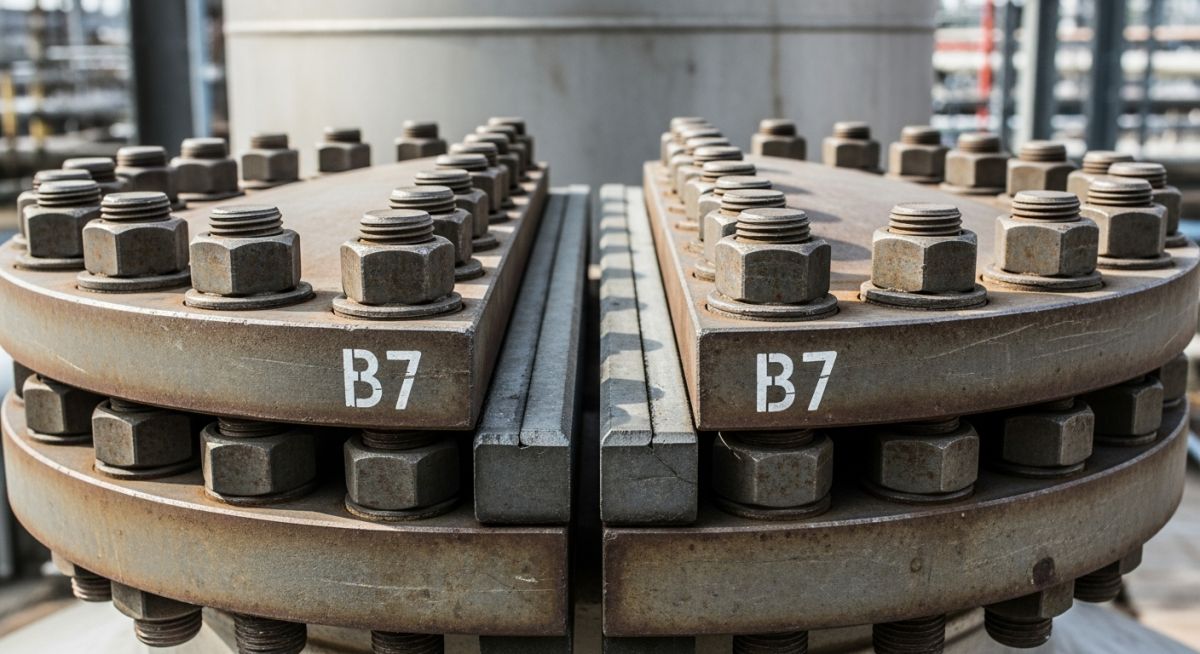
The ASTM A193 specification is the global standard for alloy and stainless steel bolting materials designed for high-temperature and high-pressure service. Widely utilized in the petrochemical, power generation, and pharmaceutical industries, these fasteners are engineered to maintain mechanical integrity in environments where standard bolting would suffer from creep or oxidation. Understanding the specific material grades under ASTM A193 is critical for ensuring the safety of pressure vessels, valves, and piping systems.
Understanding the ASTM A193 Specification for Bolting Materials
ASTM A193 defines the requirements for fasteners made of alloy steel and stainless steel for high-temperature applications. It categorizes materials into grades such as B7 (alloy steel), B16 (Chrome-Moly-Vanadium), and B8/B8M (stainless steel). Each grade is selected based on its unique yield strength, corrosion resistance, and maximum service temperature, typically governed by ASME BPVC Section VIII standards.
Table of Contents
- Technical Classification of ASTM A193 Alloy Steel Grades
- Corrosion-Resistant ASTM A193 Stainless Steel Grades
- Mechanical Properties and Strength Limits
- Engineering Selection Guide for ASTM A193
- Material Compatibility: ASTM A193 vs ASTM A194
- Interactive Calculator: Torque and Preload Tool
- Case Study: Failure Analysis of Incorrect Selection
- Quality Control: Testing and Compliance
- Frequently Asked Questions
Test Your Knowledge: Bolting Standards
Complete Course on
Piping Engineering
Check Now
Key Features
- 125+ Hours Content
- 500+ Recorded Lectures
- 20+ Years Exp.
- Lifetime Access
Coverage
- Codes & Standards
- Layouts & Design
- Material Eng.
- Stress Analysis
Technical Classification of ASTM A193 Alloy Steel Grades
The ASTM A193 specification primarily divides bolting materials into two distinct metallurgical categories: low-alloy steels and austenitic stainless steels. For heavy industrial applications governed by ASME Section II, alloy steel grades are the preferred choice due to their exceptional yield strength and resistance to thermal expansion. These materials undergo precise quenching and tempering processes to achieve the mechanical properties required for high-stress environments.
ASTM A193 Grade B7: The Industry Standard for Pressure Vessels
Grade B7 is the most widely utilized material under the ASTM A193 umbrella. It is manufactured from chromium-molybdenum steel (typically AISI 4140 or 4142) and is heat-treated to reach a minimum tensile strength of 125 ksi. Because of its reliable performance at temperatures up to 840 degrees Fahrenheit (450 degrees Celsius), it is the default selection for flange bolting in refineries and chemical plants.
ASTM A193 Grade B16: Chrome-Moly-Vanadium for Extreme Heat
When operating temperatures exceed the limits of Grade B7, engineers specify ASTM A193 Grade B16. This grade is enhanced with Vanadium, which significantly improves creep resistance and prevents stress relaxation at elevated temperatures. Grade B16 is capable of maintaining its mechanical integrity at temperatures up to 1100 degrees Fahrenheit (593 degrees Celsius), making it essential for boiler bolting and steam turbine applications.
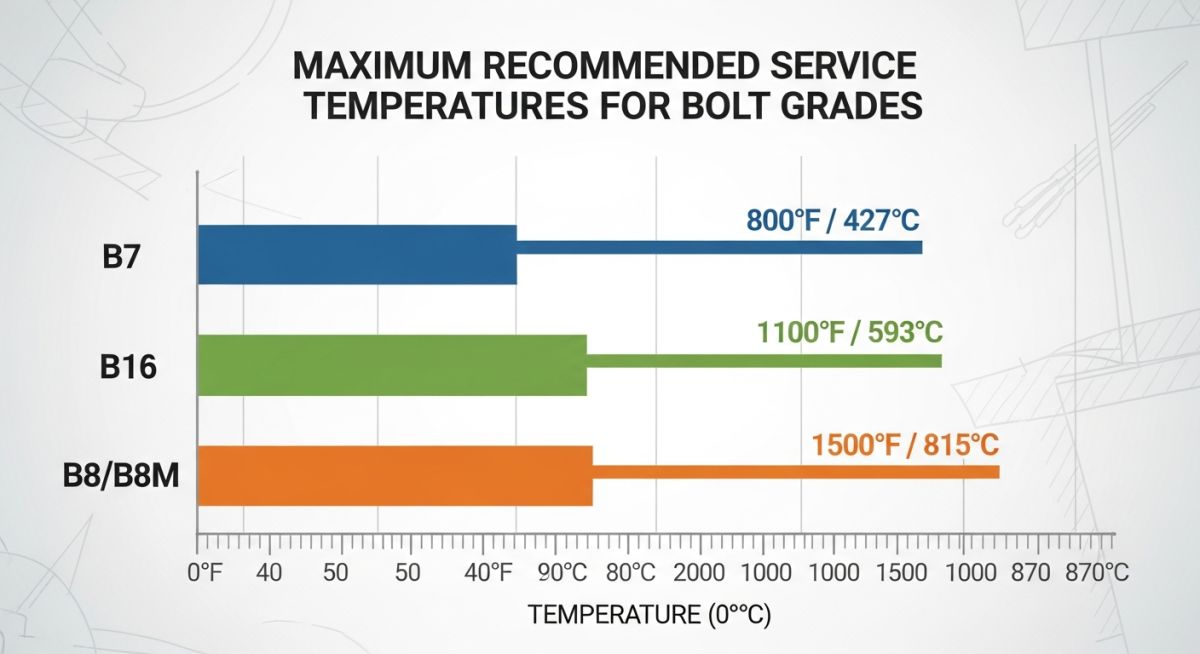
It is important to note that while these ASTM A193 alloy grades are optimized for high temperatures, they are susceptible to brittle fracture at sub-zero temperatures. For cryogenic or low-temperature service, engineers must transition to the ASTM A320 specification to ensure adequate impact toughness.
Corrosion-Resistant ASTM A193 Stainless Steel Grades
While alloy steels dominate high-strength applications, ASTM A193 austenitic stainless steel grades are essential for environments subject to chemical attack, oxidation, or cryogenic temperatures. These grades are non-magnetic and maintain high ductility even at temperatures approaching 1500 degrees Fahrenheit, although their yield strength is significantly lower than their alloy steel counterparts unless strain-hardened.
ASTM A193 Grade B8 (SS 304) and B8T (Titanium Stabilized)
Grade B8 is the standard stainless bolting material under ASTM A193, manufactured from AISI 304 stainless steel. For applications involving high-temperature service where intergranular corrosion is a risk, engineers specify ASTM A193 B8T. This variant is stabilized with Titanium, which prevents chromium carbide precipitation during the heating process, preserving the material integrity in exhaust manifolds and heat exchanger components.
ASTM A193 Grade B8M (SS 316): Superior Chloride Resistance
In marine environments or chemical processing plants involving chlorides and acids, ASTM A193 Grade B8M (AISI 316) is the preferred selection. The addition of molybdenum (2.0 to 3.0 percent) provides localized pitting resistance that standard 304 stainless steel lacks.
Difference Between Class 1 and Class 2 in ASTM A193 Bolting
A critical distinction in ASTM A193 stainless grades is the “Class” designation. Class 1 fasteners are solution annealed, providing maximum corrosion resistance but lower strength. Class 2 fasteners are solution annealed and then strain-hardened through cold working, which can more than triple the yield strength of the material, making it suitable for high-pressure flange seals.
Mechanical Properties and Strength Limits of ASTM A193
The following data table represents the minimum mechanical requirements for the most common ASTM A193 grades as of the 2026 standard update.
| Material Grade | Size (Diameter) | Tensile Strength (min ksi) | Yield Strength (min ksi) |
|---|---|---|---|
| B7 (Alloy Steel) | Up to 2.5 inches | 125 | 105 |
| B16 (Cr-Mo-V) | Up to 2.5 inches | 125 | 105 |
| B8 Class 1 | All Sizes | 75 | 30 |
| B8 Class 2 | Up to 0.75 inches | 125 | 100 |
| B8M Class 2 | Up to 0.75 inches | 110 | 95 |
Material Compatibility: ASTM A193 vs ASTM A194 Nut Selection
For a bolted joint to perform safely, the nut must be metallurgically compatible with the stud. Using an under-strength nut on a high-strength ASTM A193 bolt can lead to thread stripping under tension. The industry utilizes the ASTM A194 specification for nuts that match the thermal and mechanical profiles of A193 bolts.
Standard Paring Guide
- ● A193 B7 Studs → A194 Grade 2H Heavy Hex Nuts (Standard High-Strength)
- ● A193 B16 Studs → A194 Grade 4 or 7 (High-Temp Alloy)
- ● A193 B8 Studs → A194 Grade 8 (SS 304)
- ● A193 B8M Studs → A194 Grade 8M (SS 316)
ASTM A193 Bolt Torque and Preload Calculator
Estimate the required installation torque for ASTM A193 fasteners based on bolt diameter, target stress, and lubrication conditions.
Typical: 40,000 to 60,000 PSI for Grade B7
Formula used: T = (K × D × F) / 12. Always verify against specific gasket manufacturer requirements.
Don't miss this video related to ASTM A193
Summary: Master Piping Engineering with our complete 125+ hour Certification Course: ......
Case Study: Failure Analysis of Incorrect ASTM A193 Grade Selection
1. Project Data and Background
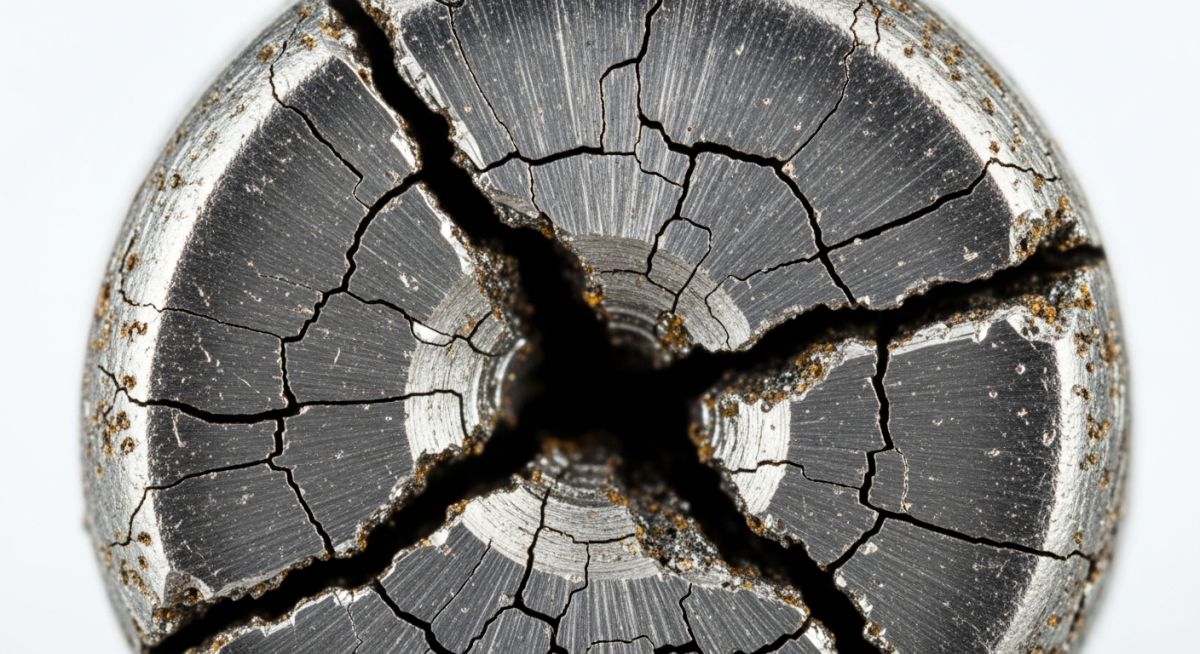
In early 2026, a high-pressure steam superheater at a power generation facility experienced recurring flange leakage at the primary outlet manifold. The manifold operated at a sustained temperature of 950 degrees Fahrenheit (510 degrees Celsius). During a maintenance turnaround, it was discovered that the installed fasteners were ASTM A193 Grade B7 stud bolts, which had been in service for approximately 24 months.
2. Failure Analysis: Stress Relaxation
Engineering analysis revealed that the ASTM A193 B7 bolts had lost nearly 40 percent of their initial clamping preload. Metallurgical examination showed that the material had undergone significant Stress Relaxation. At temperatures exceeding 800 degrees Fahrenheit, the Chromium-Molybdenum structure of Grade B7 begins to exhibit time-dependent plastic deformation (creep). This reduced the compressive force on the gasket, leading to the steam bypass and subsequent flange leakage.
3. Engineering Fix and Remediation
The remediation required a complete material upgrade to a more thermally stable grade. The following actions were implemented:
- Replacement of all B7 studs with ASTM A193 Grade B16 fasteners, which contain Vanadium for enhanced creep resistance up to 1100 degrees Fahrenheit.
- The matching nuts were upgraded to ASTM A194 Grade 7 to ensure metallurgical compatibility at elevated temperatures.
- A live-loading spring washer system was introduced to maintain preload even during minor thermal fluctuations.
Lessons Learned for Piping Engineers
Always respect the Thermal Envelope of ASTM A193 grades. While Grade B7 is the most economical high-strength option, its mechanical reliability drops sharply once the 800-degree threshold is crossed. For any steam or process service operating near this limit, specifying Grade B16 is a critical safety measure that prevents expensive leak-related shutdowns and potential catastrophic flange failure.
Frequently Asked Questions about ASTM A193
What is the maximum service temperature for ASTM A193 Grade B7 bolting?
How does ASTM A193 B8M compare to Grade B8 for corrosion resistance?
Can I use ASTM A193 Grade B7 for low-temperature or cryogenic applications?
What is the primary advantage of ASTM A193 B8 Class 2 over Class 1?
Final Engineering Overview
Mastering the various grades and classes within the ASTM A193 specification is a fundamental skill for any piping or mechanical engineer. Whether you are selecting the high-strength reliability of Grade B7 for a standard flange or the enhanced thermal stability of Grade B16 for power generation, the correctly specified fastener ensures the long-term integrity of the entire system. By adhering to the 2026 updates and ensuring compatibility with ASTM A194 nuts, facilities can significantly reduce the risk of hazardous leaks and mechanical failures.
📚 Recommended Resources: ASTM A193
Read these Guides
🎓 Advanced Training


Related posts:
![Comparison of raw PTFE material and an industrial PTFE-lined steel pipe flange]()
Teflon vs PTFE: Major Differences in Industrial Piping Applications
![Severe metal galling damage on a stainless steel threaded bolt and nut.]()
What is Metal Galling and How to Prevent It
![Certified welder performing structural welding repair on a heavy steel beam with sparks flying.]()
Mastering Industrial Welding Repair Procedures for Structural Integrity
![A fully assembled industrial pump skid system with stainless steel piping and control panels in a factory.]()
What is an Industrial Pump Skid and Its Key Advantages?
![Side-by-side comparison of an industrial flow meter and a digital flow transmitter installed on a pipeline.]()
Flow Transmitter vs Flow Meter: Key Differences Explained
![Wireless vibration sensor mounted on an industrial electric motor for condition monitoring.]()
What is Vibration Monitoring and Why is it Important?