What is the Unified Numbering System (UNS) for Metals and Alloys?

Imagine you are overseeing a high-pressure piping project where the specification calls for 316 Stainless Steel. You receive the Mill Test Reports (MTRs), but the chemistries across three different suppliers show slight variations in Molybdenum content—all within the broad “316” range, but only one meets the specific corrosion resistance your environment demands. This is where the ambiguity of trade names and broad grades fails the engineer. To solve this, the industry relies on the Unified Numbering System (UNS), a precise, singular alphanumeric designation that ensures global consistency and eliminates the guesswork in material procurement.
Key Takeaways
- 1. UNS is a comprehensive system that provides a single identification number for metals and alloys to avoid confusion between different naming conventions.
- 2. Managed jointly by ASTM International (ASTM E527) and SAE (SAE J1086), it uses a letter prefix followed by five digits.
- 3. Unlike ASTM specifications, which define product forms (pipes, plates), the Unified Numbering System (UNS) focuses strictly on the chemical composition of the alloy.
Direct Answer: What is UNS?
The Unified Numbering System (UNS) is an alphanumeric identification system for metals and alloys used in the United States and globally. It consists of a prefix letter indicating the metal family followed by five digits, providing a unique designation for each alloy to ensure chemical consistency across various manufacturing standards.
“In my 20 years of engineering consultancy, I’ve seen countless procurement delays because a buyer ordered ‘Inconel 625’ without specifying UNS N06625. Trade names change or expire, but the Unified Numbering System (UNS) remains the definitive legal and technical anchor for material integrity in high-stakes projects.”
— Atul Singla, Founder of Epcland
Complete Course on
Piping Engineering
Check Now
Key Features
- 125+ Hours Content
- 500+ Recorded Lectures
- 20+ Years Exp.
- Lifetime Access
Coverage
- Codes & Standards
- Layouts & Design
- Material Eng.
- Stress Analysis
UNS Mastery Challenge
Test your knowledge on the Unified Numbering System
1. Which two organizations jointly manage the Unified Numbering System (UNS)?
Quiz Completed!
You are now ready to dive deep into UNS technical fundamentals.
What is the Unified Numbering System (UNS)?
The Unified Numbering System (UNS) for metals and alloys is a unified identification method designed to provide a single, consistent alphanumeric designation for all commercially used metallic materials. Established to solve the confusion caused by overlapping and sometimes conflicting trade names, proprietary designations, and individual society specifications (such as AISI, SAE, or ASTM), the UNS provides a common language for engineers, metallurgists, and procurement specialists. It is not a specification in itself; rather, it is an indexing system that correlates different numbering systems to a specific chemical composition.
Managed as a joint effort by ASTM International (under ASTM E527) and the Society of Automotive Engineers (under SAE J1086), the system ensures that when an engineer specifies a material like UNS S31603, they are guaranteed a specific range of Chromium, Nickel, and Molybdenum, regardless of whether the supplier refers to it as "316L" or a proprietary brand name. This level of granularity is critical in the 2026 industrial landscape, where global supply chains require absolute chemical certainty to prevent catastrophic failures in corrosive or high-pressure environments.

Unified Numbering System (UNS) vs. Material Specifications (ASTM/ASME)
One of the most frequent points of confusion for junior engineers is the difference between a UNS number and a Material Specification (like ASTM A106 or ASME SA240). While they are linked, they serve distinct functions. The Unified Numbering System (UNS) defines WHAT the material is made of—strictly its chemical composition limits. It does not dictate how the material is made, what its final shape is, or what its mechanical properties (like tensile strength or hardness) must be.
Conversely, an ASTM Specification defines the PRODUCT FORM and CONDITION. For instance, ASTM A240 covers "Chromium and Chromium-Nickel Stainless Steel Plate, Sheet, and Strip for Pressure Vessels." Within that specification, you will find multiple alloys identified by their UNS numbers. A single UNS number, such as UNS S30400, can appear across dozens of different ASTM specifications, including those for pipes (ASTM A312), bolts (ASTM A193), or forgings (ASTM A182). Therefore, in 2026 procurement documents, a complete material call-out must include both the specification (for mechanical/form requirements) and the UNS number (for chemical precision).
Decoding the Unified Numbering System (UNS) Number Format
The Unified Numbering System (UNS) utilizes a straightforward 6-character alphanumeric structure: one letter prefix followed by five digits. The prefix letter is the most critical element, as it categorizes the material into a specific family or group. This system was designed to be expandable, allowing for new alloys to be added without disrupting the existing framework.
- The Prefix Letter: Indicates the broad category. For example, 'G' is for carbon and alloy steels (formerly AISI/SAE 4-digit codes), 'S' is for stainless and heat-resisting steels, and 'N' is for nickel and nickel alloys.
- The Five Digits: In many cases, these digits are adapted from older, established systems. For example, AISI 304 stainless steel became UNS S30400. When the digits end in something other than '00', it often denotes a specific modification, such as '03' for "L" (Low Carbon) grades.
- Chemical Specificity: Every registered UNS number has a documented chemical analysis range maintained by the SAE/ASTM committee. This prevents the "composition creep" often seen in generic trade names.
Examples of Unified Numbering System (UNS) for Common Materials
Understanding the Unified Numbering System (UNS) is easiest when comparing it to the traditional naming conventions that engineers have used for decades. The system was designed to incorporate existing 3-digit and 4-digit codes from the AISI and SAE systems, typically by adding a prefix and trailing zeros. In 2026, these designations are the legal standard for Mill Test Reports (MTRs) globally.
| Material Category | Common Name / Grade | UNS Designation |
|---|---|---|
| Carbon Steels | AISI 1020 | G10200 |
| Stainless Steels | 316L Stainless | S31603 |
| Nickel Alloys | Inconel 625 | N06625 |
| Copper Alloys | Admiralty Brass | C44300 |
| Reactive Metals | Titanium Grade 2 | R50400 |
Why Engineering Projects Rely on the Unified Numbering System (UNS)
The Unified Numbering System (UNS) is not merely a filing system; it is a risk mitigation tool. In the 2026 engineering environment, where materials are often "dual-certified" (meeting both ASTM and EN standards), the UNS number serves as the definitive anchor for chemical compliance.
One primary reason for its importance is the elimination of naming ambiguity. For example, "Alloy 20" is a popular trade name, but specifying it as UNS N08020 ensures that the manufacturer adheres to the exact 32-38% Nickel and 19-21% Chromium range required for sulfuric acid resistance. Without the UNS designation, a supplier might provide a slightly "off-spec" variation that carries the same trade name but fails in service.
Technical Standards Governing UNS (ASTM E527 & SAE J1086)
The operational framework of the Unified Numbering System (UNS) is governed by two critical industry standards:
-
ASTM E527: Standard Practice for Numbering Metals and Alloys
This standard provides the detailed methodology for assigning numbers. It outlines how committees evaluate new alloy submissions to ensure they are unique and sufficiently different from existing chemistries before a new UNS number is issued.
-
SAE J1086: Numbering Metals and Alloys
A technical equivalent to ASTM E527, this SAE standard is the primary reference for the automotive and aerospace industries. It ensures that the UNS system remains cross-compatible across different industrial sectors.
Common Pitfalls in Unified Numbering System (UNS) Identification
While the Unified Numbering System (UNS) is robust, several common errors occur during material selection and procurement:
- Confusing UNS with ASTM: Relying on a UNS number alone without a product specification (like ASTM A312) results in receiving material with undefined mechanical properties (tensile/yield).
- Ignoring the "L" Grades: In stainless steels, the difference between S31600 (316) and S31603 (316L) is critical for welding. Using the wrong UNS number can lead to intergranular corrosion (weld decay).
- Proprietary Over-Reliance: Using trade names in purchase orders instead of UNS numbers can lead to "Equivalent" material disputes where the chemical composition doesn't perfectly align with the design basis.
EPCLand YouTube Channel
2,500+ Videos • Daily Updates
UNS Prefix & Category Identifier
Quickly identify the metal family based on the Unified Numbering System (UNS) prefix letter.
Don't miss this video related to Case study

Summary: Master Piping Engineering with our complete 125+ hour Certification Course: ......
Unified Numbering System (UNS) Failure Case Study
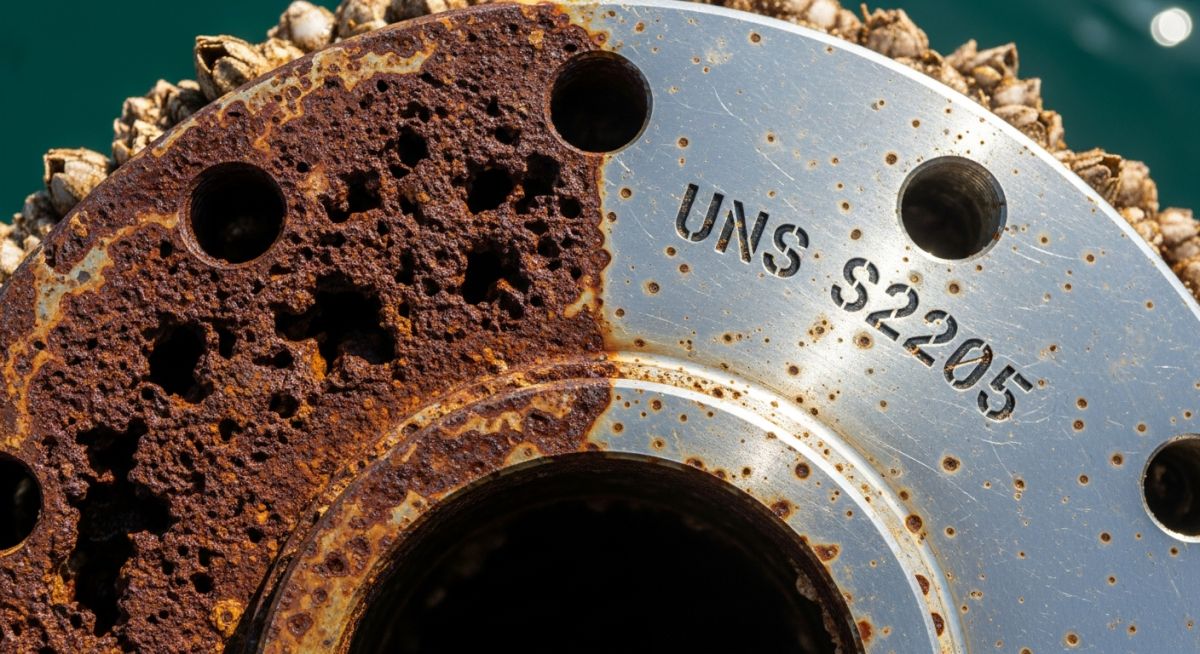
The Incident: "The 316 vs. 316L Oversight"
During a 2025 offshore expansion project, a piping contractor procured "316 Stainless Steel" flanges for a seawater cooling system. While the purchase order specified "316," the design basis required UNS S31603 (316L) to prevent sensitization during the field-welding process.
Technical Root Cause
The supplier delivered UNS S31600, which has a higher carbon content (up to 0.08%). Because the project documentation lacked the specific Unified Numbering System (UNS) code, the material was accepted based on the generic trade name. During welding, chromium carbides precipitated at the grain boundaries (sensitization).
Within 14 months of operation in 2026, the heat-affected zones (HAZ) of the welds exhibited severe intergranular stress corrosion cracking (IGSCC). Forensic analysis confirmed that if UNS S31603 (max 0.03% Carbon) had been strictly enforced, the failure would have been avoided.
Engineering Lesson Learned
- Generic Names are Dangerous: Phrases like "316" or "Duplex" cover multiple UNS numbers with vastly different corrosion resistances.
- MTR Verification: Mill Test Reports must be cross-checked against the specific Unified Numbering System (UNS) alphanumeric code, not just the ASTM grade.
- Procurement Precision: Purchase orders should explicitly list the UNS number to ensure legal and technical accountability.
Expert Insights: Lessons from 20 years in the field
Navigating material selection in 2026 requires more than just a passing familiarity with metal grades. Here are the key takeaways from two decades of metallurgical consultancy:
- ● The "Dual Certification" Trap: Many materials are stamped as both S30400 and S30403. Always verify which Unified Numbering System (UNS) chemistry your specific welding procedure specification (WPS) is qualified for to avoid non-conformance reports.
- ● Global Rosetta Stone: When sourcing from China (GB standards) or Europe (EN/DIN), the Unified Numbering System (UNS) is often the only reliable way to confirm that "Equivalent" alloys actually meet the chemical thresholds required by ASME Section II.
- ● Digital Traceability: Modern ERP and BIM systems in 2026 prioritize the 6-character UNS code over descriptive names for automated material tracking. Ensure your digital twins use these codes for lifetime integrity management.